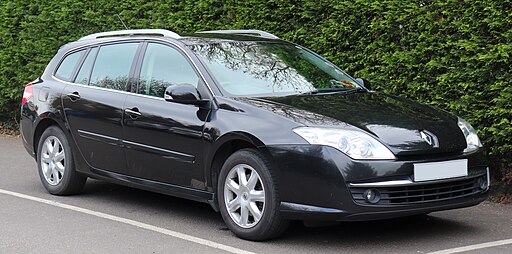
Renault Laguna faults
Engine & Performance
Keyless-Entry System and Random Stalling
Many Laguna II/III models suffer unexpected engine cut-outs when driving or idling. The root cause lies in the key-card system: worn contacts or failing transceivers interrupt the immobiliser, cutting power to the ECU. Symptoms include sudden loss of drive and no “check engine” stored codes until you reinsert or re-pair the card.
EGR Valve Blockages
Diesel Lagunas (especially 1.9 dCi) accumulate soot in the EGR valve, causing poor low-speed response, black smoke and elevated oil consumption. A clogged valve leads to limp-home mode on highway runs. Cleaning or replacing the EGR assembly typically restores performance.
Turbocharger Oil-Pressure Switch Fault
On the 1.9 dCi turbo engines, the oil-pressure sensor can stick or leak. A stuck switch falsely reports high pressure and starves the turbo of lubrication, eventually wrecking the turbochargers seals. Early warning: whistling or whining under boost followed by loss of power.
Diesel Particulate Filter (DPF) Issues
Short urban drives prevent proper DPF regeneration, triggering warning lights, reduced engine power and rising fuel consumption. If left unchecked, the filter becomes irreversibly blocked and must be replaced at significant cost.
Fuel Pump and Hard-Start
Lagunas sometimes struggle to start, accompanied by a strong petrol smell. The in-tank fuel pump or its pressure sensor often fails, dropping rail pressure below cranking requirements. Symptoms include slow starter spin and intermittent fuel-cut codes.
Transmission & Drivetrain
Sticky or Slipping Clutch
Diesel models with manual gearboxes commonly develop a sticking clutch or spongy pedal feel after 100 000 km. The pressure plate and release bearing wear prematurely, making gear changes difficult and risking gearbox damage if ignored.
Power-Steering Pump Failure
Loss of hydraulic assist—or noisy steering under load—points to a failing PS pump or contaminated fluid. Steering effort spikes, especially at low speeds. Replacing the pump and flushing the system cures the problem.
Suspension & Steering
Rear Axle Bush Wear
Knocking noises from the rear over bumps indicate worn rear axle bushes. As the rubber degrades, the rear subframe shifts, causing indefinite handling and alignment drift. Replacement typically requires a subframe support and new bushes installed in pairs.
Steering-Column Motor Faults
Laguna III equipped with electric power steering can develop stiff steering or grinding noises. The column’s small assist motor or its worm-gear assembly seizes over time. Symptoms worsen when parking; a failing motor may trigger EPS warning lights.
Electrical & Body Electronics
Electric Handbrake Failures
The electric-handbrake actuators and solenoids are prone to stalling or failing to release. Wiring harness corrosion and occasional software glitches exacerbate the issue. Owners report the handbrake refusing to disengage or auto-apply unexpectedly, often requiring a dealer reflash or actuator replacement.
Central-Locking and Window Regulator Faults
Intermittent door-lock failures arise from corroded microswitches in the lock actuators. Power-window regulators also bind or fail completely, leaving windows stuck open or closed. Symptoms include grinding noises and uneven window travel; full regulator assemblies are usually the cure.
Dashboard and Infotainment Glitches
High-mileage Lagunas often exhibit touchscreen freezes, erratic warning-lamp illumination or loss of certain instrument-cluster functions. Software updates or ECU replacements are sometimes needed, along with cleaning of earth-point connections to eliminate phantom faults.
Cooling & Heating
Coolant Leaks and Overheating
Cracked hoses, failing water pumps or degraded radiator end-tanks cause slow coolant loss and sporadic overheating. Look for coolant stains beneath the front end and pressure-test the system. Timely hose and pump replacement prevents warped heads or gasket failure.
Heater-Control Panel Burn-Out
Faulty circuitry in the heater-climate control module can leave you with no heat or fan control. Symptoms include unresponsive knobs and complete HVAC shutdown. Replacement panels are available, but require careful disassembly of the dash center console.
Renault Laguna as a used car
The Renault Laguna has long been a stalwart of the European midsize saloon and estate segment. When considering a used Laguna, buyers benefit from a blend of ride comfort, generous space and typically lower purchase prices compared to rivals. This article explores Laguna’s three generations, engine and transmission choices, comprehensive technical parameters, known reliability concerns and practical buying advice to help you navigate the market with confidence.
Generations Overview
First Generation (B56; 1994–2001)
The original Laguna debuted in 1994, replacing the Renault 21. It introduced a fresh aerodynamic design, high build quality for its class and multiple body styles: hatchback, saloon and estate. Safety was a highlight, with early adoption of dual airbags and ABS. Key characteristics:
- Platform shared loosely with the Renault Safrane.
- Emphasis on ride comfort over sporty handling.
- Facelift in 1998 added updated bumpers, new lights and interior trim improvements.
Second Generation (X56; 2000–2007)
Arriving in late 2000, the second-gen Laguna raised the bar on interior quality and technology. It earned European Car of the Year 2001. A distinctive feature was the continuously controlled damping (CCD) suspension on higher trims, allowing adjustable ride firmness. Notable updates:
- 2005–2007 facelift brought sharper front end, redesigned dashboard and improved infotainment.
- Introduction of Renault’s signature key-card passive entry system.
- Estate (“Grandtour”) became Renault’s best-selling estate in 2001.
Third Generation (L90; 2007–2015)
The final Laguna reinvented itself on the Renault–Nissan C-platform, aligning styling with the Scenic MPV and offering advanced driver assists. It featured a more sculpted body, panoramic sunroof options and an elevated brand image. Production ran until 2015, with diesels dominating European sales. Highlights:
- Standard ESP, hill-start assist and multiple airbags.
- Optional adaptive cruise control and lane-departure warning on higher trims.
- Late-cycle upgrades in 2011 improved engine performance and lowered emissions.
Engine and Transmission Options
Petrol Engines
| Engine | Output | Torque | Transmission | Notes |
|---|---|---|---|---|
| 1.6 16V (1st Gen) | 107 PS @ 5 750 rpm | 147 Nm @ 4 000 | 5-speed manual | Basic economy unit, adequate for city use. |
| 2.0 16V (1st & 2nd Gen) | 140 PS @ 5 500 rpm | 190 Nm @ 3 750 | 5-speed manual / 4-speed auto | Smooth mid-range, moderate fuel burn. |
| 2.0 T Turbo (2nd Gen) | 205 PS @ 5 500 rpm | 265 Nm @ 2 800 | 6-speed manual / DP0 automatic | Characterful, but high-load reliability issues. |
| 3.0 V6 (2nd Gen) | 204 PS @ 5 500 rpm | 270 Nm @ 4 000 | 6-speed manual / 5-speed auto | Refined power; poor economy (~10 L/100 km). |
| 2.0 TCE (3rd Gen) | 180 PS @ 5 500 rpm | 300 Nm @ 1 650 | 6-speed manual / EDC dual-clutch | Strong torque, smooth shifts in EDC form. |
Diesel Engines
| Engine | Output | Torque | Transmission | Notes |
|---|---|---|---|---|
| 1.9 dCi (1st & 2nd Gen) | 102 PS / 120 PS | 240 Nm / 260 Nm | 5-speed manual / DP0 automatic | Long-lived when serviced; EGR clogging. |
| 2.2 dCi (1st & 2nd Gen) | 126 PS / 150 PS | 300 Nm / 320 Nm | 6-speed manual / DP0 automatic | Smooth torque, occasional injection issues. |
| 2.0 dCi (3rd Gen) | 150 PS @ 4 000 rpm | 320 Nm @ 2 000 | 6-speed manual / EDC dual-clutch | Balanced efficiency, sensitive DPF. |
| 3.0 dCi V6 (3rd Gen) | 235 PS @ 3 750 rpm | 450 Nm @ 2 000 | 6-speed EDC dual-clutch | Strong tow car, high maintenance costs. |
Transmission Choices
- 5- and 6-speed manuals across most engines. Clutch wear around 120 000 km is common.
- DP0 conventional autos on early 2.0 T and dCi – prone to mechatronic failures near 150 000 km.
- DP8 (renamed EDC) dual-clutch on 2.0 TCE and 2.0 dCi third-gen improves shift speed; requires fluid change every 60 000 km.
Technical Specifications by Generation
Dimensions & Capacities
| Specification | 1st Gen Hatchback | 2nd Gen Saloon | 3rd Gen Estate |
|---|---|---|---|
| Length | 4 200 mm | 4 510 mm | 4 632 mm |
| Width (excl. mirrors) | 1 765 mm | 1 812 mm | 1 814 mm |
| Height | 1 429 mm | 1 430 mm | 1 496 mm |
| Wheelbase | 2 610 mm | 2 705 mm | 2 705 mm |
| Boot Capacity (min–max) | 350–1 220 L | 440–1 700 L | 533–1 825 L |
| Fuel Tank | 60 L | 60 L | 65 L |
Weight & Load
- Kerb weight: from 1 225 kg (1.6 16V hatch) to 1 765 kg (3.0 dCi estate trim).
- Maximum towable braked mass: 1 400–2 100 kg, depending on engine and body style.
- Roof load limit: 75 kg.
Performance & Fuel Economy
| Engine Variant | 0–100 km/h | Top Speed | Combined Consumption (WLTP) |
|---|---|---|---|
| 1.9 dCi 120 PS | 11.2 s | 185 km/h | 5.5 L/100 km |
| 2.0 dCi 150 PS (3rd) | 9.4 s | 205 km/h | 5.2 L/100 km |
| 2.0 TCE 180 PS | 8.7 s | 220 km/h | 6.8 L/100 km |
| 3.0 dCi 235 PS V6 | 7.2 s | 228 km/h | 7.5 L/100 km |
Reliability and Common Issues
First- and Second-Gen Weak Points
- EGR-valve soot buildup on 1.9 dCi leading to limp-home mode.
- Key-card entry system false reads causing random stall events.
- CCD suspension actuators fail electrically in second-gen CCD models.
Third-Gen Known Faults
- Dual-clutch mechatronic unit malfunctions: hesitation or shove in EDC cars.
- Diesel particulate filter (DPF) clog when urban use predominates.
- Electronic parking brake actuator failures and wiring corrosion.
Electrical Gremlins
- Infotainment screen freezing or reboot loops on high-mileage units.
- Central-locking microswitch corrosion causing intermittent lock/unlock.
- Instrument cluster pixel failure on backlit sections.
Suspension and Steering
- Rear axle trailing-arm bush wear in second-gen estate over 120 000 km.
- Power-steering pump whining under boost load in 3.0 V6 cars.
- Front lower-arm ball-joint play in early models.
Buying Guide for a Used Laguna
What to Inspect
- Engine bay for oil or coolant leaks (particularly around cylinder-head gasket).
- Underbody for rust bubbles on sills and wheel arches—pre-2003 cars.
- Transmission behavior: smooth gear shifts in manuals and no judder in EDC/CVT.
- Electronic features: test all window switches, handbrake, parking sensors and keyless entry.
- Suspension by pushing down at each corner—listen for clunks.
Service History and Documentation
- Confirm diesel services every 15 000 km, including fuel-filter changes.
- Check for gearbox-oil changes on DP0/EDC units at least every 60 000 km.
- Look for stamp in logbook verifying coolant and timing-belt replacements at prescribed intervals (typically 120 000 km).
Price and Depreciation
- First-gen hatchbacks (1.6 16V) can start under €1 500 in high-mileage condition.
- Second-gen estates with 2.0 dCi or CCD suspension hold mid-range values between €3 000–€5 000.
- Third-gen diesels (2.0 dCi) in good trim fetch €6 500–€9 000, depending on miles and service history.
Maintenance and Ownership Costs
Scheduled Maintenance
- Minor service: oil, filter, visual checks ≈ €180–€250.
- Major service: timing belt, water pump, spark plugs (petrol) ≈ €550–€750.
- DPF cleaning or regeneration service ≈ €200–€350 if done preventively.
Typical Repair Costs
| Component | Approximate Cost |
|---|---|
| EDC mechatronic rebuild | €1 200–€1 800 |
| EGR valve replacement (dCi) | €350–€500 |
| Suspension bush replacement | €400–€600 per axle |
| Infotainment module swap | €600–€900 |
Insurance and Taxation
- Insurance group ranges from 12 (1.6 hatch) to 24 (3.0 dCi estate).
- Road tax based on CO₂: pre-2001 cars usually exempt; newer diesels taxed at €200–€400 annually in many EU markets.
Conclusion
A used Renault Laguna can offer exceptional value: spacious cabins, well-tuned ride and a broad choice of engines to suit varied demands. By focusing on verified service history, thoroughly inspecting known weak points—particularly on diesel variants—and selecting a well-cared-for example, you can secure a reliable, comfortable daily driver or family estate without overextending your budget.
