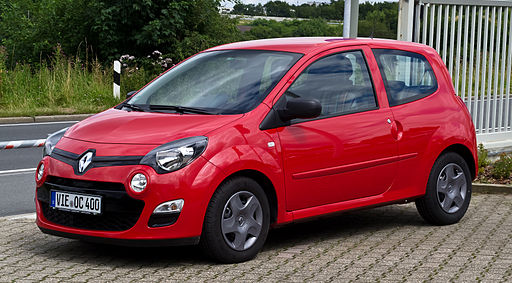
Renault Twingo faults
Engine and Fuel Delivery
- Timing-chain tensioner noise Symptoms: Ticking or rattling at cold start, growing louder as oil warms. Cause: Hydraulic tensioner failure or stretched chain on 1.0 and 0.9-litre turbo engines. Remedy: Replace the full timing-chain kit—tensioner, rails and chain—around 80 000 – 100 000 km.
- Misfires and rough idle Symptoms: Engine warning lamp, jerky running, loss of power under load. Cause: Cracked ignition coils or worn spark plugs on petrol variants; carbon-fouled injectors on diesels. Remedy: Change all coils and spark plugs together; clean or renew injectors and o-rings as needed.
- Engine overheating Symptoms: Rising coolant temperature, heater blowing cool air, coolant loss. Cause: Sticking thermostat, failing electric radiator fan or split coolant hoses. Remedy: Replace thermostat and fan motor; inspect hoses and radiator for leaks.
- Diesel particulate filter clogging (dCi models) Symptoms: Limp-home mode, frequent forced-regen warnings, poor motorway economy. Cause: Short urban trips prevent high-temperature regeneration. Remedy: Carry out a forced regeneration or professional ultrasonic clean; plan regular longer runs.
Transmission and Drivetrain
- Manual gearbox crunch Symptoms: Grinding into first or reverse, stiff gear changes. Cause: Worn synchro rings or misadjusted linkage. Remedy: Rebuild gearbox synchromesh or replace worn components; adjust linkage.
- Clutch slipping or judder Symptoms: Engine revs rise without acceleration, vibration on take-off. Cause: Worn clutch friction plate or contaminated pressure plate. Remedy: Fit a new clutch kit and resurface flywheel if needed.
- Automatic gearbox harsh shifts (EDC) Symptoms: Sudden jolts between ratios, delayed kick-down, transmission warning lamp. Cause: Degraded transmission fluid or failing mechatronic valve body. Remedy: Change transmission fluid and filter; if faults persist, repair or replace mechatronic module.
Electrical and Electronics
- Key-fob and central-locking software faults Symptoms: Doors won’t unlock/lock, rapid key-fob battery drain. Cause: ECU software glitch or worn RF antenna ring. Remedy: Flash latest body-module software; replace antenna ring or reader unit.
- Electric-window regulator failure Symptoms: Slow or non-working window, motor whine without movement. Cause: Stripped gear in regulator or seized guide channel. Remedy: Install a new window regulator assembly and lubricate tracks.
- Dashboard cluster flicker or blank screen Symptoms: Intermittent gauges, dead warning lamps or frozen infotainment. Cause: Poor solder joints on PCB or failing capacitors. Remedy: Reflow solder joints in the cluster or swap in a refurbished module; update infotainment software.
- Power-steering assist drop-out Symptoms: Heavy steering at low speed, sudden loss of assist. Cause: Worn electric-motor brushes or wiring harness corrosion. Remedy: Replace electric-power-steering motor; clean and secure all electrical connections.
Suspension and Steering
- Anti-roll-bar link and bushing wear Symptoms: Clunks or squeaks over bumps, loose feel in corners. Cause: Split rubber bushes and fatigued metal link joints. Remedy: Renew links and bushes in matched pairs; apply anti-seize on bolts.
- Steering knuckle fatigue (recall on third-gen) Symptoms: Vague steering, knocking under load at low speed. Cause: Insufficient knuckle cast strength. Remedy: Fit reinforced replacement knuckle under recall or service campaign.
- Steering-column U-joint click Symptoms: Repetitive click at full lock, slight play at steering wheel. Cause: Broken locating clip on lower universal joint. Remedy: Replace the small U-joint clip and inspect for further wear.
Body, Interior and Recalls
- Seat-belt buckle recall Symptoms: Buckle may detach in a collision, warning lamp in some markets. Cause: Faulty buckle assembly. Remedy: Free replacement of affected buckles under recall.
- Bonnet-skin adhesive failure Symptoms: Top layer of bonnet peeling or lifting at edges. Cause: Poor bonding of bonnet skin to structure. Remedy: Dealer will add reinforcements to secure the skin.
- Rear-spoiler skin separation Symptoms: Rattles from tailgate, loose-feeling spoiler. Cause: Inadequate adhesive on spoiler skin. Remedy: Reinforced bonding treatment under manufacturer bulletin.
- Panel and trim rattles Symptoms: Buzzes or creaks over uneven surfaces. Cause: Loose clips or aged foam backings behind door cards and dash trims. Remedy: Tighten or replace clips; add foam-tape dampers where needed.
Heating, Ventilation and Air Conditioning
- Blower-motor resistor pack failure Symptoms: Fan works only on highest speed or not at all. Cause: Burnt-out resistor coil or corroded connector. Remedy: Swap in a new resistor module and clean chassis-earth points.
- Musty A/C odors Symptoms: Mildew smell on fan-on, damp carpet under glovebox. Cause: Blocked evaporator-drain tube and mold on evaporator core. Remedy: Flush drain, treat heater-box with biocide spray and replace cabin filter.
Renault Twingo as a used car
The Renault Twingo has been synonymous with urban agility since its launch in 1992. Designed to navigate tight streets and deliver peppy performance, it quickly became one of Europe’s best-selling city cars. Today’s used-car market offers examples spanning three distinct generations, each with its own blend of technical innovation and practical charm. This guide explores the Twingo’s evolution, engine and chassis parameters, dimensions, safety features, ownership costs and buying advice to help you find the right pre-owned model.
Evolution of the Renault Twingo
First Generation (1992–2007)
Renault’s original Twingo was a radical departure from convention. It featured a single-box body, asymmetrical door arrangement and an air-cooled 1.2-litre engine early in production before switching to water-cooled units. Its exceptionally tight 8.65-metre turning circle and cavernous cabin made small-car ownership more fun and practical.
Second Generation (2007–2014)
The second-generation Twingo retained the original’s playful spirit but adopted a more traditional three-door hatch layout. New 1.2- and 1.4-litre petrol engines arrived alongside a 1.5-litre dCi diesel. Improved safety features, sharper steering and a more refined suspension brought city-car competence closer to supermini levels.
Third Generation (2014–2022)
Built in partnership with Daimler, the third-generation Twingo embraced a rear-engine, rear-drive architecture shared with the Smart ForFour. This layout freed up cabin space for a flat-floor design, enhanced boot access and retained its trademark tight turning circle. The lineup included turbocharged petrol engines and an all-electric variant introduced in later years.
Technical Parameters
Engine Options
| Generation | Engine | Displacement | Power (hp) | Torque (Nm) |
|---|---|---|---|---|
| I (1992–2007) | C1G 1.2-litre SOHC | 1,149 cc | 54 | 87 |
| I | D7F 1.2-litre 16-valve | 1,149 cc | 60 | 102 |
| II (2007–2014) | D4F 1.2-litre 16-valve | 1,149 cc | 75 | 107 |
| II | K4M 1.6-litre 16-valve | 1,598 cc | 133 | 160 |
| II | K9K 1.5 dCi | 1,461 cc | 75 | 215 |
| III (2014–2022) | H4Bt 0.9-litre TCe turbo | 898 cc | 90 | 135 |
| III | H4Dt 1.0-litre TCe turbo | 999 cc | 100 | 160 |
| III-Electric | ZOE R-110 electric motor | n/a | 109 | 225 |
Transmission Options
- 5-speed manual: Standard on most petrol and diesel variants
- 6-speed dual-clutch (EDC): Available on top-spec second-generation petrol
- Single-speed reduction gearbox: Used by the third-generation electric model
Exterior Dimensions
| Metric | First Gen | Second Gen | Third Gen |
|---|---|---|---|
| Length | 3,015 mm | 3,621 mm | 3,597 mm |
| Width | 1,635 mm | 1,646 mm | 1,645 mm |
| Height | 1,410 mm | 1,495 mm | 1,554 mm |
| Wheelbase | 2,295 mm | 2,460 mm | 2,490 mm |
| Turning Circle | 8.65 m | 9.3 m | 8.65 m |
Interior Space and Boot Capacity
- First Generation offers 160 litres behind rear seats
- Second Generation expands to 185 litres, 980 litres with seats folded
- Third Generation reaches 219 litres and 980 litres flat
Chassis, Suspension and Brakes
- Front: MacPherson struts with lower wishbones
- Rear: Torsion beam (I/II) or independent coil-spring setup (III)
- Brakes: Ventilated front discs, solid rear discs or drums on base trims
- Steering: Rack-and-pinion with speed-sensitive electric assistance on Gen III
Safety and Driver Assistance
- Standard across later generations: ABS, EBD, front and side airbags
- Available features: ESC stability control, hill-start assist, rear parking sensors
- Third generation adds automated emergency braking and lane-departure warning on upper trims
Infotainment and Comfort
- Entry-level: Single-DIN radio with Bluetooth on Gen II onwards
- Mid-range: 7-inch touchscreen with Android Auto and Apple CarPlay on Gen III
- Climate control: Manual on most trims, automatic available on top-spec models
Ownership and Running Costs
Maintenance Schedule
- Oil and filter replacement every 15,000 km or 12 months
- Spark-plug change every 60,000 km on petrol engines
- Timing‐chain dressings checked at 80,000 km on turbo variants
- Brake‐fluid flush every two years
Insurance, Tax and Depreciation
- Insurance groups range from 3 to 12 depending on engine and spec
- CO₂-based tax brackets keep diesel and turbo-petrol models competitive
- First‐generation models retain around 30 % of original value after ten years; later generations settle around 40–50 % after five years
Buying Tips for a Used Twingo
- Verify timing‐chain service on 0.9 TCe engines to avoid tensioner failure
- Inspect thermostat and fan operation to prevent overheating issues
- Check for wear on rear suspension arms and secure mounting points
- Test electric-drive components thoroughly on ZOE Electric models, including battery health report
- Confirm full service history, especially for clutch replacements and gearbox fluid changes
Conclusion
The Renault Twingo offers exceptional city-car packaging, nimble handling and a range of efficient powertrains that suit diverse budgets. Whether you choose a classic first-generation budget option, a refined second-generation hatch or an innovative third-generation rear-drive model—even an electric variant—the Twingo remains a compelling used-car choice. Armed with these technical parameters and buying insights, you can confidently select a Twingo that balances practicality, economy and character for years of urban motoring.
_%E2%80%93_Frontansicht,_21._Juli_2012,_Heiligenhaus.jpg)