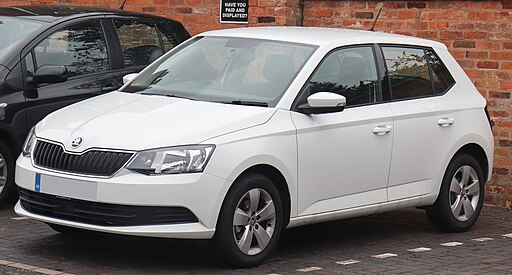
Škoda Fabia faults
Engine & Drivetrain
- Fuel pump issues Symptoms: Engine sputtering, loss of power, difficulty starting. Cause: Weak or failing fuel pump leading to inconsistent pressure and flow. Remedy: Replace the fuel pump assembly and inspect the fuel filter for blockages.
- Timing belt wear or failure Symptoms: Poor engine performance, rattling noise from front of engine, engine won’t start. Cause: Age-related degradation or skipped teeth on the timing belt. Risk: If the belt snaps, severe internal engine damage can occur. Remedy: Adhere strictly to the manufacturer’s belt-change interval (usually around 60,000–100,000 km).
- Clutch slippage or failure Symptoms: Difficulty shifting gears, engine revs rising without acceleration, judder on take-off. Cause: Worn clutch plate or pressure plate, often accelerated by “riding” the clutch or aggressive driving. Remedy: Clutch kit replacement and inspection of flywheel surface for hotspots or warping.
- Turbocharger malfunctions (on TSI models) Symptoms: Noticeable loss of boost, black exhaust smoke, whistling or whining noises under load. Cause: Oil starvation, carbon build-up on the turbine shaft, or foreign object damage. Remedy: Turbo rebuild or replacement; ensure oil change intervals are met and use correct oil grade.
Transmission
- Automatic gearbox jerking, slipping or delayed engagement Symptoms: Harsh or delayed shifts, slipping into neutral under load. Cause: Low or degraded transmission fluid, faulty shift-position sensors, internal wear. Remedy: Check and replace transmission fluid and filter; diagnose sensors; in severe cases, gearbox rebuild.
Suspension & Steering
- Suspension noise and degraded ride quality Symptoms: Clunks, squeaks or rattles over bumps; excessive body roll. Cause: Worn shock absorbers, weakened springs, deteriorated control-arm bushings. Remedy: Replace shocks and springs in pairs; renew control-arm bushings or complete control arms.
Body & Interior
- Rear door seals leaking Symptoms: Wet carpet in rear footwells, musty odor inside cabin. Cause: Aged or deformed door-seal rubber allowing water ingress. Remedy: Fit new OEM door seals and ensure proper seating during installation.
- Tailgate sticking or misalignment Symptoms: Tailgate requires force to close or doesn’t latch evenly. Cause: Worn/misaligned hinges, damaged latch mechanism. Remedy: Adjust or replace hinges; lubricate and, if needed, swap the latch assembly.
- Electric window failures Symptoms: Window won’t move, moves slowly, or operates erratically. Cause: Faulty window motors, broken regulators, or wiring harness faults. Remedy: Test motor current draw; replace regulator/motor unit; repair any damaged wiring.
- Water ingress into dashboard Symptoms: Dampness under dash, failure of electronic modules, interior light malfunctions. Cause: Faulty sunroof or windscreen seals allowing rainwater into HVAC plenum. Remedy: Reseal or replace affected seals; dry out HVAC system before reassembly.
- Climate control inconsistencies Symptoms: One side of cabin too warm/cold, AC blowing only hot air or not engaging. Cause: Failed blend-door actuator, leaking refrigerant or blocked condenser. Remedy: Replace actuator; perform refrigerant top-up and system bleed; check condenser for debris.
- Central locking actuator faults Symptoms: One door ignores key fob commands; intermittent locking/unlocking. Cause: Worn door-lock actuator or broken linkage inside the door. Remedy: Remove door panel; replace faulty actuator and test all doors before reassembly.
Electrical & Electronics
- Infotainment system freezes or reboots Symptoms: Touchscreen lock-ups, system reboots while driving, audio drop-outs. Cause: Software glitches, failing head-unit memory, poor grounding. Remedy: Software update; if unresolved, replace head-unit or improve chassis grounding.
- Faulty instrument cluster Symptoms: Dead pixels on gauge faces, erratic needle movement, intermittent backlighting. Cause: Aging LCD panels or loose cluster connections. Remedy: Cluster refurbishment (LCD replacement) or full-unit swap.
- Connectivity issues (Bluetooth/USB) Symptoms: Phone pairing fails, USB port not recognizing devices. Cause: Damaged USB module, outdated firmware, antenna/cable faults. Remedy: Update system firmware; replace USB hub or antenna cable as needed.
- Door-open warning light stuck on Symptoms: Dashboard shows a door ajar despite all doors closed. Cause: Faulty door-switch sensor or wiring short. Remedy: Identify the sensor loop at the affected door; replace switch or repair wiring.
- Inaccurate fuel gauge readings Symptoms: Fuel needle not matching actual tank level; sudden drop from half-full to empty. Cause: Faulty fuel‐sender float or electrical connector corrosion. Remedy: Replace sender unit in tank; clean or swap corroded connectors.
Manufacturer Recalls & Safety Notices
- Driver airbag inflator propellant deterioration Impact: On deployment, inflator housing may burst, sending fragments into cabin. Affected units: Certain 2012–2014 models. Remedy: Free recall repair—airbag module replacement.
- Front airbag non-deployment or delayed inflation Impact: Reduced occupant protection in a crash scenario. Affected units: Late-2021 to early-2022 production. Remedy: Recall campaign to replace or reprogram airbag control units.
Škoda Fabia as a used car
Škoda Fabia has established itself as a stalwart in the supermini segment, combining Czech practicality with Volkswagen Group engineering. Launched in 1999, the Fabia quickly gained a reputation for solid build quality, spacious cabin, and efficient powertrains. Today, its affordability on the used‐car market makes it a compelling option for buyers seeking value, reliability, and low running costs. Throughout its generations, the Fabia has catered to a wide audience—from city commuters to small-family haulers—while maintaining the hallmarks of durability and ease of ownership.
Generations and Model Years
Škoda released the Fabia in three main generations:
- Second-hand values peak for the first generation (1999–2007) due to rock-bottom pricing, but corrosion on early models can be an issue.
- The second generation (2007–2014) saw major chassis improvements, sharper styling, and the introduction of TSI petrol engines and common-rail diesels.
- The latest generation (2014–2021) brought a more refined interior, LED lighting, and advanced infotainment, though early examples may show infotainment bugs and higher depreciation.
Understanding the strengths and weaknesses of each generation helps used-car shoppers match budget to desired features and potential maintenance costs.
Technical Specifications
Engine Options
Škoda Fabia spans a range of engines, from thrifty three-cylinder units to peppy four-cylinder turbos. The most common powerplants include:
| Engine Code | Displacement | Power (hp) | Torque (Nm) | Fuel Type |
|---|---|---|---|---|
| 1.0 MPI | 999 cc | 60–75 | 95–100 | Petrol |
| 1.2 MPI | 1198 cc | 60–70 | 104–110 | Petrol |
| 1.2 TSI | 1197 cc | 85–110 | 160–200 | Petrol Turbo |
| 1.4 TDI | 1422 cc | 75–90 | 230 | Diesel |
| 1.6 TDI | 1598 cc | 90–105 | 250–260 | Diesel |
The 1.2 TSI and 1.4 TDI engines strike the best balance between performance and economy. Early TSI units can suffer from carbon buildup if oil-service intervals slip, while older diesels reward only those with high annual mileages.
Performance Metrics
Smaller MPI engines deliver modest acceleration: 0–100 km/h in roughly 14–17 seconds. Turbocharged variants improve the sprint significantly:
- 1.2 TSI (110 hp): 0–100 km/h in 10.5 s, top speed ≈ 191 km/h
- 1.4 TDI (90 hp): 0–100 km/h in 12.5 s, top speed ≈ 172 km/h
These figures ensure confident urban progress and comfortable motorway cruising, particularly if opting for the turbocharged petrol or diesel.
Dimensions and Weight
Throughout its three generations, the Fabia’s footprint has grown modestly:
- Length: 3,970–4,262 mm
- Width (excluding mirrors): 1,642–1,780 mm
- Height: 1,472–1,520 mm
- Wheelbase: 2,467–2,564 mm
- Curb weight: 1,010–1,270 kg (depending on engine, trim, and options)
Its compact exterior belies a surprisingly spacious cabin, with rear-seat legroom matching many larger C-segment cars and a 300–1,150 L cargo capacity in the estate version.
Fuel Consumption and Emissions
Real-world fuel economy hovers around:
- 1.0 MPI: 5.4–6.2 L/100 km
- 1.2 TSI: 5.0–5.8 L/100 km
- 1.6 TDI: 4.0–4.5 L/100 km
CO₂ emissions range from 94 g/km on economical diesels to around 127 g/km for early petrols. Proper maintenance—especially timely oil and air-filter changes—preserves these figures and reduces the likelihood of costly carbon or diesel-particulate filter (DPF) failures.
Transmission Variants
Škoda Fabia offered both manual and DSG automatic gearboxes:
- 5-speed manuals paired with MPI petrols and entry-level diesels provide robust simplicity and low service costs.
- 6-speed manuals, standard on TSI and higher-output diesels, deliver more relaxed motorway cruising and improved fuel economy.
- 7-speed DSG dual-clutch automatics, available on 1.2 TSI and some 1.6 TDI variants, offer rapid shifts but require DSG-specific fluid changes every 60,000 km or 4 years to avoid mechatronic wear.
When shopping, verify service records for DSG-equipped cars and inspect for rough engagement or jerking under acceleration.
Ride and Handling
Fabia’s chassis tuning emphasizes comfort without sacrificing agility:
- MacPherson struts at the front and a torsion-beam rear axle deliver predictable handling and low maintenance costs.
- Higher-grade trims may include improved springs and dampers, along with larger alloy wheels that sharpen turn-in but can transmit more road harshness.
- Steering is light and communicative, making tight parking maneuvers easy while retaining feel at higher speeds.
Look for noise from rear bushes and wear on anti-roll bar links, especially as mileage rises beyond 150,000 km.
Interior and Equipment
Early Fabias focused on function over flair, but later models introduced features such as:
- Touchscreen infotainment with smartphone integration (MirrorLink, Apple CarPlay, Android Auto)
- Dual-zone automatic climate control and rear AC vents
- Adjustable lumbar support, heated seats, and leather upholstery on higher trims
- Keyless entry, rear-parking sensors, and adaptive cruise control on newer generations
Even base models tend to include ABS, multiple airbags, and electronic stability control. Inspect for worn seat fabrics and fading plastics, especially on light-colored trims.
Safety Features
Across its lifespan, the Fabia has earned respectable Euro NCAP ratings:
- First generation: three stars for adult occupant protection
- Second generation: four stars, with side-impact airbags standard on later years
- Third generation: five stars, thanks to reinforced bodyshell, optional autonomous emergency braking, and lane-departure warning
Check that all airbags deploy lights extinguish correctly, and test braking in a safe environment to verify ABS and ESC intervene smoothly.
Maintenance and Reliability
Common Maintenance Items
Routine replacement intervals for a well-cared-for Fabia include:
- Engine oil and filter: every 15,000 km or 1 year
- DSG transmission fluid: every 60,000 km or 4 years
- Spark plugs (TSI): every 60,000 km
- Brake fluid: every 2 years
- Timing belt (if applicable): every 90,000 km or 5 years
Failing to follow these schedules often leads to performance loss, elevated emissions, or mechanical damage.
Typical Repair Costs
- Brake-pad replacement: €80–€150 per axle
- Clutch-kit replacement (manual): €450–€700, depending on labour rates
- DPF cleaning or replacement: €350–€1,200, depending on severity and whether off-car cleaning is possible
- Infotainment head-unit swap: €250–€500, excluding coding fees
Obtaining multiple quotes and using genuine or high-quality aftermarket parts helps manage expenses over the car’s lifetime.
Buying Guide for Used Škoda Fabia
Pros and Cons
- Pros
- Exceptional interior space for class
- Strong value retention on the used market
- Wide choice of economical engines
- Simple, dependable chassis
- Cons
- Some early petrols prone to carbon build-up
- DSG units demand strict service schedules
- Basic trim levels feel spartan compared to rivals
- Rust can afflict older first-generation cars
Pricing and Depreciation Trends
On the European market, typical used-car pricing falls roughly as follows:
| Age | Price Range (EUR) |
|---|---|
| 2–4 years | 9,000–14,000 |
| 5–7 years | 5,500–9,000 |
| 8–12 years | 2,500–5,500 |
| 13+ years | 1,500–2,500 |
Prices vary with specification, mileage, and regional demand. Diesels command a small premium if they have low-mileage, but recent emissions regulations may affect resale value in some cities.
Pre-Purchase Inspection Checklist
- Confirm full service history and receipts for major services.
- Test-drive in varied conditions to reveal engine, transmission, and suspension behavior.
- Inspect bodywork for rust at wheel arches, sills, and under the doors.
- Check DPF regeneration history or smoke during highway runs for diesels.
- Examine cabin electronics: infotainment, climate system, and instrument cluster for glitches.
A thorough inspection by a Škoda-specialist garage can identify issues hidden from a casual buyer’s eye.
Conclusion
As a used-car proposition, the Škoda Fabia offers an unbeatable mix of space, efficiency, and affordable running costs. By selecting the right generation, engine, and transmission—and adhering to maintenance schedules—drivers can enjoy many years of trouble-free motoring. Whether as a first car, a city commuter, or a small-family hatchback, the Fabia remains a smart purchase in the highly competitive supermini market. When armed with the technical insight and buying tips above, prospective owners can secure a reliable companion for the road ahead.
