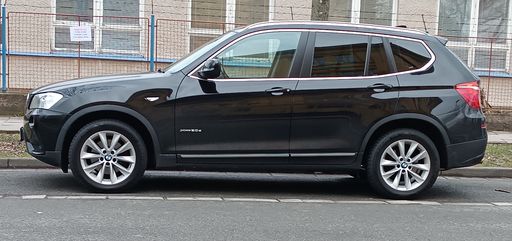
The BMW X3 occupies a compelling position in the compact luxury SUV segment for buyers looking at used vehicles. Since its launch, the X3 has grown in size, capability and technical sophistication, evolving from a traditional soft-road SUV into a refined Sports Activity Vehicle (SAV) with strong on-road dynamics, generous cargo space and a premium interior. On the used market, the X3 is attractive because it balances everyday usability with sporting character, all packaged in a recognizable and well-executed Bavarian design. The combination of advanced chassis systems, a range of powertrains from efficient four-cylinder variants to performance-oriented six-cylinder engines, and the breadth of standard and optional equipment makes it appealing for buyers who want a luxury feel without new-car prices. However, prospective buyers should weigh the benefits against maintenance costs and the importance of verified service history, as upkeep on older Bimmers can be more expensive than on mainstream brands.
Powertrain and Engine Specifications
Under the bonnet, used BMW X3 models vary widely depending on generation and trim, but a significant portion on the market comes from the third generation (G01, introduced 2017), which offers a mix of petrol, diesel and mild-hybrid options. Standard petrol variants often feature a 2.0-liter TwinPower Turbo four-cylinder producing around 190 hp and roughly 310 Nm of torque, paired with an eight-speed automatic transmission and all-wheel drive, which aids traction in diverse conditions and contributes to a balanced driving experience. Higher-output petrol models, such as the xDrive30i and M40i, push power and torque further, with 30i variants delivering quicker acceleration and the M40i approaching sports car-like performance. Diesel versions, like the xDrive20d or xDrive30d, supply strong low-end torque, improved fuel economy and often appeal to high-mileage users due to diesel’s inherent efficiency. For examples built in later years, mild-hybrid technology is integrated to improve efficiency and smooth start/stop behavior. On select performance-oriented variants, a six-cylinder petrol engine brings significantly more power and torque, improving acceleration and top-speed figures for enthusiasts and those seeking brisk overtaking ability. These powertrain variations mean that a used X3 can serve practical daily needs as well as satisfy more dynamic driving preferences.
Dimensions, Capacities, and Utility
Even as a used car, the BMW X3 remains competitive in terms of space and utility. The third-generation X3 typically measures around 4,755 mm in length with a wheelbase of approximately 2,865 mm, offering a roomy cabin that comfortably accommodates adults in both front and rear seats. Cargo capacity is generous, with luggage space expanding from around 570 liters with the rear seats in place to nearly 1,700 liters when they are folded, making it well suited for family trips, pet transport or holiday luggage. Gross vehicle weight is usually in the neighborhood of 2,500 kg depending on trim and equipment, and towing capability on many models is robust, with braked trailer loads often rated up to 2,400 kg, which expands the SUV’s versatility for activities like boating or caravan towing. Fuel tank capacity typically sits around 65 liters, which strikes a balance between driving range and space efficiency. These dimensions and capacities make the X3 adaptable for both commuting and more demanding transportation tasks without compromising the premium feel.
Performance and Driving Characteristics
On used BMW X3 examples, performance varies according to engine choice but generally reflects BMW’s emphasis on dynamic driving. Base four-cylinder petrol models can accelerate from 0–100 km/h in the low 8-second range, while higher-powered six-cylinder and M-performance versions accomplish the sprint in significantly shorter times, approaching five seconds or less depending on the model. Top speed figures are typically electronically limited around 215–250 km/h, again depending on the variant. The eight-speed automatic transmission fitted across most of these models is known for its smooth shifts and ability to balance performance with fuel economy. Steering and suspension setups on the X3 often emphasize a blend of comfort and responsiveness, leaning toward a firmer and more engaging feel compared to some non-premium rivals. This setup gives drivers confidence on twisty roads and stability at highway speeds, though a firmer ride may be noticed on rough surfaces. Dynamic stability control, adaptive suspension options and advanced all-wheel-drive systems are frequently offered or available, further enhancing the X3’s capability envelope. (bmw.com)
Fuel Economy and Emissions
Fuel consumption on used BMW X3 vehicles varies with engine type and driving conditions but broadly aligns with its class. Four-cylinder petrol versions often post combined consumption figures in the 6.9–7.6 l/100 km range under standardized testing conditions, while diesels are typically more frugal, especially on extra-urban routes. CO₂ emissions reflect these consumption figures, usually placing mid-range petrol variants ahead of heavier or high-performance versions in emissions performance. Models equipped with mild-hybrid systems can offer smoother idle-stop operation and minor reductions in fuel usage in urban environments. Real-world economy will depend on maintenance state, driving style, load and terrain, but used owners regularly report that careful driving and regular servicing are key to achieving optimal efficiency over the vehicle’s lifespan.
Common Issues and Used Ownership Considerations
When buying a used BMW X3, it is essential to consider typical ownership costs and potential issues that can arise with age and mileage. Among enthusiasts and owners, discussions highlight that routine maintenance such as oil changes, brake and fluid services is straightforward, but more complex repairs like turbo, cooling system or electronics work can be expensive if not covered by warranty or service plans. Some model years with the popular B48 four-cylinder engine have been subject to recalls or advisories due to potential starter relay corrosion, which has safety implications if not addressed. Mileage intervals around 50,000–75,000 miles are often cited as points where ancillary components may begin to need attention, and verifying a full service history is crucial for assessing prior care. Independent inspections before purchase, attention to coolant and oil leaks, and understanding the implications of past modifications or missed services are all important parts of making an informed used car decision. While the X3 is generally well-liked by used owners for its blend of performance, practicality and luxury, those without a maintenance budget or without experience dealing with premium German vehicles may find ownership costs higher than average.
In summary, the BMW X3 as a used vehicle offers a compelling mixture of performance, utility and premium feel, with technical specifications that remain competitive in the compact luxury SUV field. Buyers should balance its desirable features against long-term care costs and choose examples with strong documentation and inspected mechanical health for the best ownership experience.
