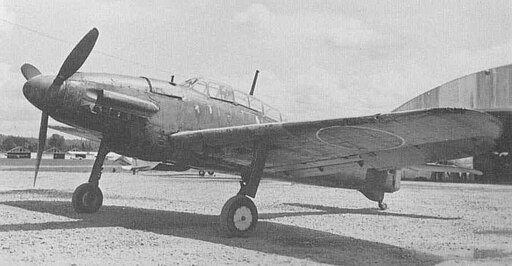
Aichi M6A
Aichi M6A Seiran: The Submarine-Launched Attack Aircraft
The Aichi M6A, widely known by its reporting name “Seiran” (Clear Sky Storm), stands as one of the most fascinating and innovative aircraft to emerge from Japan’s wartime engineering efforts. Designed as a two-seat, submarine-launched attack floatplane, the M6A was conceived to operate from specially modified submarines and to carry out long-range surprise attacks. Its visionary design and compact configuration allowed it to be stored in the narrow cylindrical hangars of the I-400 class submarines, making it a unique solution in the evolving realm of naval aviation during World War II.
Design and Development
Conceptual Development and Mission Objectives
From the late 1930s, the Imperial Japanese Navy sought ways to extend the reach of its air capabilities. The concept of launching attack aircraft from submarines offered a strategic surprise element by allowing the delivery of ordnance against distant targets. Aichi Kokuki was tasked with developing an aircraft that was not only compact but also capable of performing dive bombing or torpedo attacks. The result was the M6A Seiran, a design driven by the need for stealth, rapid deployment, and sufficient payload to challenge enemy defenses.
The aircraft was specifically engineered to meet several demanding requirements:
- Submarine Compatibility: The design needed to allow the aircraft to be stowed within a cylindrical hangar approximately 3.5 meters in diameter.
- Dual Role Capability: Whether carrying an 850-kg torpedo or an equivalent weight in bombs, the M6A had to perform as both a dive bomber and a torpedo bomber.
- Rapid Deployment: The aircraft was built to be quickly assembled and launched from the confined deck of a submarine, with provisions for water-based takeoff and landing.
Aerodynamic and Structural Innovations
The M6A Seiran exhibited a host of innovations that underscored its unique operational concept:
- Folding Wing Mechanism: Its wings were designed to rotate 90 degrees and fold hydraulically against the fuselage. This ingenious feature drastically reduced the storage space required aboard the submarine and allowed for a streamlined profile while submerged.
- Detachable Twin Floats: To facilitate water landings during recovery operations, the aircraft was equipped with detachable twin floats. For missions that demanded enhanced performance and speed, these floats could be jettisoned in flight.
- Streamlined Airframe: With a low-wing monoplane configuration, the M6A was highly aerodynamic. Its design balanced the high-speed requirements of an attack aircraft with the need for robust construction to withstand dive bombing maneuvers.
Technical Specifications
General Dimensions and Weight
The compact size and efficient layout of the Aichi M6A were critical design elements for its intended role. The dimensions reflect a careful balancing act between performance and the spatial limitations imposed by submarine storage:
- Length: 11.64 meters (38 feet 2 inches)
- Wingspan: 12.26 meters (40 feet 3 inches) when fully extended; designed to fold for storage aboard a submarine
- Height: 4.58 meters (15 feet)
- Wing Area: 27.0 square meters (291 square feet)
In terms of weight, the aircraft was built to be robust yet light enough for effective performance:
- Empty Weight: Approximately 3,300 kilograms (7,275 pounds)
- Maximum Takeoff Weight: Around 4,445 kilograms (9,800 pounds)
These parameters ensured that the Seiran could be maneuvered efficiently on water and in the air while carrying a heavy payload when necessary.
Propulsion and Performance Metrics
Central to the performance of the M6A was its powerful, single piston engine, which enabled it to attain impressive speeds even with a substantial payload:
- Engine Model: Aichi Atsuta (a license-built version of the Daimler-Benz DB 601)
- Engine Power: 1,050 kW (1,408 horsepower) at maximum output
- Crew: 2 (pilot and observer/gunner)
The performance of the aircraft was well-suited for the rapid strikes envisioned in its design concept:
- Maximum Speed: Approximately 430 km/h (267 mph)
- Cruise Speed: Around 300 km/h (186 mph)
- Range: Approximately 1,200 kilometers (648 nautical miles, 746 miles)
- Service Ceiling: Up to 9,900 meters (32,480 feet)
These performance figures made the M6A one of the faster and higher-flying floatplanes in its class, allowing it to swiftly reach its targets and evade enemy defenses.
Airframe and Wing Construction
The airframe of the M6A was constructed using a combination of metal alloys and fabric-covered control surfaces. This mixed construction offered necessary strength while minimizing weight:
- Wing Design: The low-wing monoplane structure helped achieve a stable flight profile, especially crucial during the dive bombing phases.
- Storage Adaptations: The folding wing design, coupled with a tail that could also fold, allowed the entire aircraft to fit within the tight confines of a submarine hangar.
Innovations such as these not only addressed the spatial limitations of submarine operations but also contributed to the overall agility and aerodynamic efficiency of the aircraft.
Armament and Operational Capabilities
Offensive Armament and Payload Versatility
The Aichi M6A was built to deliver a significant destructive payload. Its flexible armament configuration was one of its most strategic assets:
- Primary Payload: The aircraft could carry a single 850-kg torpedo or an equivalent weight in bombs inside an internal bomb bay.
- Role Flexibility: This design allowed the M6A to be used for both torpedo strikes against ships and dive bombing missions on land targets, enhancing its tactical versatility in combat situations.
Defensive Systems and Crew Protection
Although the Seiran was primarily an offensive weapon, provisions were made to protect its small crew during operations:
- Defensive Armament: The aircraft was typically fitted with light defensive machine guns to guard against enemy interceptors during vulnerable phases of the mission.
- Crew Configuration: The two-seat layout, with separate positions for the pilot and observer/gunner, ensured that both navigation and defensive operations could be handled effectively during high-stress combat scenarios.
The combination of potent offensive payloads with modest defensive measures made the M6A a focused but deadly component of Japan’s submarine air attack doctrine.
Operational History and Strategic Impact
Service in the Imperial Japanese Navy
The Aichi M6A Seiran was an integral part of the Imperial Japanese Navy’s ambitious plans to use submarine-based aircraft carriers for surprise attacks. Although only 28 units were produced, the aircraft were specifically tailored for operations from the I-400 class submarines:
- Submarine Launch Concept: The Seiran was designed to be launched from streamlined hangars built into the submarines. Once airborne, the aircraft could be jettisoned from the submarine and proceed on its mission.
- Intended Role: Its primary mission was to conduct long-range attacks against enemy targets, ideally striking coastal cities or naval installations before enemy defenses could react.
Despite its limited production numbers, the very concept of the M6A underscored a bold shift in naval warfare strategy—a move toward deep-strike capabilities that exploited the stealth and extended range of submarine-based aircraft.
Post-War Assessment and Legacy
Today, the Aichi M6A Seiran is remembered as an embodiment of Japan’s innovative response to the strategic challenges of World War II:
- Technological Ingenuity: The aircraft’s folding wing mechanism and detachable floats exemplify advanced engineering solutions that were ahead of their time.
- Historical Significance: The M6A is frequently studied by aviation historians and military strategists as an example of how constrained operational environments can drive creative design and technological breakthroughs.
- Enduring Mythos: Although the Seiran never saw extensive combat action, its conception and technical achievements continue to captivate enthusiasts, symbolizing the ambitious spirit of wartime innovation.
Conclusion
The Aichi M6A Seiran remains a striking example of how engineering excellence and strategic necessity can converge to produce a weapon of extraordinary capability. From its compact dimensions and folding wing design to its powerful Aichi Atsuta engine and versatile payload options, the M6A was purpose-built for the unique challenges of submarine-based warfare.
Its technical parameters—including a maximum speed of 430 km/h, a service ceiling nearly reaching 10,000 meters, and the capacity to reliably carry an 850-kg torpedo or equivalent bomb load—reflect the meticulous planning and forward-thinking design philosophy that underpinned its development. As an aircraft designed to emerge from the concealed confines of a submarine and unleash a devastating blow to enemy targets, the Seiran encapsulates both the bold ambitions and the technical prowess of its era.
