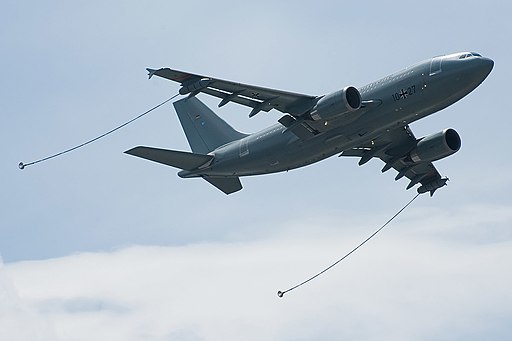
Airbus A310 MRTT
The Airbus A310 MRTT (Multi‑Role Tanker Transport) is a versatile military aircraft derived from the well‑established Airbus A310‑300C commercial airliner. Designed to fulfil a broad range of roles—from air-to‑air refuelling and cargo transport to troop movement and medical evacuation—the A310 MRTT is a prime example of military conversion ingenuity. With a robust structure, advanced refuelling capabilities, and flexible mission configurations, the A310 MRTT has become an invaluable asset for modern air forces around the world.
Historical Background and Development
Originally conceived as a derivative of the Airbus A310‑300C, the A310 MRTT was developed to address the need for a multi‑role tanker and transport aircraft that could operate in diverse and challenging environments. Recognizing the advantages of converting an existing commercial platform—such as proven aerodynamics, reliability, and cost‑efficiency—Airbus Military embarked on a series of modifications to meet strict military requirements. These enhancements included extended fuel capacity, dedicated aerial refuelling systems, and structural adaptations for rapid reconfiguration. Since its introduction into service in the early 2000s, the A310 MRTT has cemented its reputation as a workhorse in both tactical and strategic missions.
Design and Structural Overview
The transformation from a civilian airliner to a multi‑role military platform necessitated a series of thoughtful design modifications. The A310 MRTT’s structure, while retaining the proven configuration of its commercial predecessor, features significant alterations to support its new operational roles.
Aerodynamic and Structural Modifications
A high‑wing design remains a key characteristic of the A310 series, providing excellent lift and stability during low‑altitude and short‑field operations. In converting to the MRTT variant, engineers reinforced the airframe to withstand the stresses associated with aerial refuelling and dynamic transport missions. Additional structural reinforcements ensure that the aircraft maintains the durability required for prolonged service in demanding conditions. Modern composite materials are integrated into specific areas of the structure to reduce weight while preserving strength and impact resistance.
Conversion for Multi‑Role Tanker and Transport Operations
The hallmark of the A310 MRTT is its dual capability as both a tanker and a transport aircraft. Dedicated modifications include:
- Aerial Refuelling Systems: The installation of two air‑to‑air refuelling pods—one under each wing near the wingtips—enables rapid and efficient fuel transfer to a variety of receiver aircraft. Some configurations also support the flying boom system, expanding the aircraft’s compatibility with allied fleets.
- Additional Centre Tanks (ACT): Five extra centre fuel tanks have been integrated into the fuselage. These Additional Centre Tanks (ACT) significantly boost the deliverable fuel capacity, allowing for longer missions without the need for in‑flight refuelling from external sources.
- Flexible Cabin Configuration: The interior of the aircraft is designed to be reconfigured quickly to accommodate passengers, troops, or cargo. Medical evacuation (MedEvac) variants can feature specialized intensive care units and stretchers, enhancing the aircraft’s role in humanitarian operations.
Technical Specifications and Parameters
The Airbus A310 MRTT is characterized by impressive technical parameters that reflect its multi‑role design. Below is an overview of its key specifications:
Dimensions and Weight
- Length: Approximately 47.4 meters (155 ft 6 in)
- Wingspan: Approximately 43.9 meters (144 ft 0 in)
- Height: Approximately 15.81 meters (51 ft 10 in)
- Empty Weight: Around 114,000 kg (251,000 lb)
- Maximum Takeoff Weight (MTOW): Up to approximately 164,000 kg (361,000 lb) in certain configurations
Crew, Capacity, and Payload
- Flight Crew: Typically 3 (for hose‑and‑drogue refuelling) or 4 (for flying boom operations)
- Passenger Capacity: Up to 214 passengers in the transport configuration
- Deliverable Fuel: Approximately 40,000 kg (88,000 lb) of fuel
- Cargo Capability: Up to 36,000 kg (79,000 lb) of cargo in dedicated transport setups
Propulsion and Performance
The A310 MRTT is powered by twin engines that are derived from high‑performance variants originally used on the A310‑300C. Although engine options may vary, the typical configuration includes engines known for their reliability and efficiency under continuous high‑load operations. Key performance figures include:
- Cruise Speed: Approximately 480 km/h (259 knots)
- Service Ceiling: Operative up to around 30,000 ft (9,144 m)
- Range: With full fuel capacity and standard payload, the aircraft can cover distances of roughly 4,500 km (2,430 nautical miles)—extending further when configured primarily for tanker missions with additional fuel tanks
Summary Table of Key Parameters
| Parameter | Value |
|---|---|
| Length | 47.4 m (155 ft 6 in) |
| Wingspan | 43.9 m (144 ft) |
| Height | 15.81 m (51 ft 10 in) |
| Empty Weight | ~114,000 kg (251,000 lb) |
| Maximum Takeoff Weight | Up to ~164,000 kg (361,000 lb) |
| Crew | 3–4 (depending on refuelling system) |
| Passenger Capacity | Up to 214 |
| Deliverable Fuel | ~40,000 kg (88,000 lb) |
| Cargo Capability | Up to 36,000 kg (79,000 lb) |
| Cruise Speed | ~480 km/h (259 knots) |
| Service Ceiling | ~9,144 m (30,000 ft) |
| Range | ~4,500 km (2,430 NM) (varies with configuration) |
Operational Capabilities and Applications
The Airbus A310 MRTT’s adaptability makes it suitable for a variety of missions, reflecting its multi‑role design philosophy.
Air-to‑Air Refuelling and Tanker Missions
One of the primary roles of the A310 MRTT is aerial refuelling. Equipped with both hose‑and‑drogue systems and, in some variants, a flying boom, the aircraft is capable of refuelling combat aircraft, transport planes, and surveillance platforms. Its extended fuel capacity, bolstered by the Additional Centre Tanks, allows it to serve as a long‑endurance tanker, extending the range and operational capability of entire fleets.
Troop and Cargo Transport
Beyond its tanker role, the A310 MRTT excels as a tactical transport aircraft. With a spacious cabin that can be rapidly reconfigured for seating, cargo pallets, or medical evacuation setups, it is ideal for the rapid deployment of troops and equipment. This operational flexibility underpins its widespread adoption by various air forces and international agencies.
Medical and Humanitarian Missions
In MedEvac and humanitarian configurations, the A310 MRTT can be equipped with medical facilities and specialized equipment to provide urgent care during crises. Its ability to quickly switch between roles makes it a critical component in disaster relief and humanitarian operations, where rapid response and high payload flexibility are essential.
Safety, Maintenance, and Upgrade Potential
Safety is paramount in military aviation, and the A310 MRTT was designed with a host of features to ensure the well‑being of its crew and payload.
Safety Features and Redundancies
The aircraft incorporates multiple redundancies in its hydraulic, electrical, and avionics systems. Advanced onboard monitoring systems provide continuous diagnostics and real‑time alerts to pilots, greatly enhancing situational awareness during critical phases of flight. The robust design of the converted airframe also contributes to its excellent crashworthiness and durability under adverse conditions.
Maintenance and Lifecycle Considerations
A key benefit of converting an existing A310‑300C platform is the mature maintenance infrastructure that accompanies it. The A310 MRTT benefits from well‑established support networks, and its modular systems facilitate regular inspections and rapid part replacement. Continued upgrades in avionics and engine systems ensure that the aircraft remains modern, reliable, and cost‑effective over its service life.
Future Upgrade Potential
As technology evolves, the A310 MRTT’s flexible design allows for relatively straightforward integration of new systems—ranging from enhanced digital avionics and networking capabilities to improvements in fuel efficiency and alternative power sources. This future‑proofing ensures that the aircraft can be adapted to meet the changing demands of modern warfare and humanitarian operations.
Conclusion
The Airbus A310 MRTT exemplifies the successful fusion of commercial airliner reliability with military operational versatility. Its transformation from the Airbus A310‑300C into a multi‑role platform capable of aerial refuelling, troop and cargo transport, and even medical evacuation demonstrates Airbus Military’s innovative approach to modernizing existing platforms. Featuring robust technical specifications, such as a substantial payload capability, advanced refuelling systems, and flexible interior configurations, the A310 MRTT remains a key asset for air forces and humanitarian agencies alike.
