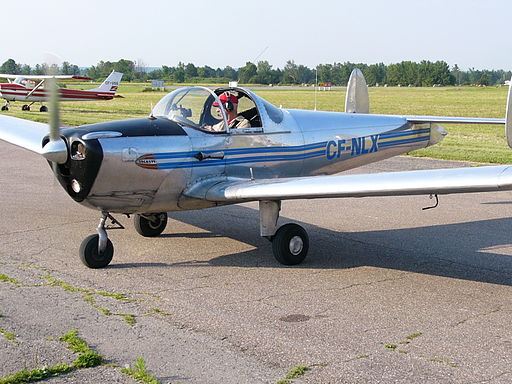
ERCO Ercoupe
The ERCO Ercoupe became an icon of postwar general aviation due to its innovative design and friendly handling characteristics. Introduced in the late 1940s, the Ercoupe was conceived to make flying more accessible and to eliminate some of the complexities that had long intimidated new pilots. With its unique twin‐rudder system, side-by-side seating, and spin-resistant qualities, the Ercoupe quickly earned a reputation as one of the safest and easiest aircraft to fly. Even today, restored Ercoupes continue to captivate aviation enthusiasts and serve as a reminder of a transformative era.
Development and Design Philosophy
Historical Overview
Developed by the Engineering and Research Corporation (ERCO) in the wake of World War II, the Ercoupe was designed to address two primary challenges: reducing the likelihood of spins and simplifying the flight controls for novice pilots. At a time when many training aircraft demanded complex rudder coordination and multi–control inputs, the Ercoupe represented a bold new approach. By streamlining the flight control system, ERCO aimed to make flying inherently safer and more intuitive.
Design Innovations
A key aspect of the Ercoupe’s design was its commitment to safety and ease of operation:
- Spin-Resistance Through Control Coupling: One of the most innovative features of the Ercoupe is its interconnected flight controls. By linking the ailerons and the twin rudders (which function in unison), the aircraft inherently prevents spins. Without the need for rudder pedals, the pilot operates with a single control system that handles both roll and yaw. This design minimizes pilot workload and greatly reduces the chance of inadvertent stalls or spins.
- Streamlined Cockpit Layout: The Ercoupe’s cockpit is arranged in a side-by-side seating configuration. This not only enhances communication between the pilot and any passenger or instructor but also simplifies the instrument panel. Essential flight data are presented on analog gauges that are easy to read, keeping the pilot’s focus on flying rather than deciphering complex instrumentation.
- Economical Construction: Utilizing a combination of aluminum and fabric-covered wooden structures, the Ercoupe was built for cost-effective production while maintaining durability and low operating costs. Its economical design made it an attractive option both for flight training schools and private owners.
Technical Specifications
A detailed look at the technical parameters of the ERCO Ercoupe reveals the thoughtful engineering behind its timeless design. While several variants exist, many share common features that reflect its original intent.
Airframe and Dimensions
The Ercoupe’s airframe is renowned for its balanced proportions and clean aerodynamic lines that contribute to its gentle handling and efficiency. Key dimensions include:
| Parameter | Specification | Comments |
|---|---|---|
| Crew | 2 (Side-by-side seating) | Designed for both pilot training and leisure; excellent for instructor/student interaction. |
| Overall Length | ~22 ft (6.7 m) | A compact fuselage that contributes to nimble handling. |
| Wingspan | ~31 ft (9.4 m) | Offers ample lift while maintaining low drag. |
| Height | ~7 ft (2.1 m) | A low-profile design that enhances aerodynamic efficiency. |
| Wing Area | ~140 ft² (13 m²) | Sufficient for low-speed lift characteristics essential for safe landings. |
| Empty Weight | ~1,000 lb (455 kg) | Lightweight construction enhances performance and fuel efficiency. |
| Maximum Takeoff Weight | ~1,450 lb (658 kg) | Provides margin for fuel, pilot, and additional equipment. |
Engine and Propulsion
The Ercoupe was typically powered by a reliable, small-displacement engine that balanced performance with economy. Many models featured the Continental series of engines.
| Parameter | Specification | Comments |
|---|---|---|
| Engine Type | Flat-4, air-cooled engine (e.g., Continental O-200) | Known for reliability and ease of maintenance in light aircraft. |
| Power Output | Approximately 100 hp (75 kW) | Adequate horsepower for efficient climb and cruise performance. |
| Propeller Configuration | Fixed-pitch propeller | Provides consistent thrust without additional complexity. |
Flight Controls and Avionics
The Ercoupe’s cockpit design was ahead of its time—a focus on simplicity without sacrificing functionality:
- Integrated Control System: The elimination of rudder pedals, replaced by a twin-rudder system linked with the ailerons, ensures coordinated turns and spin resistance. This innovation makes the aircraft exceptionally forgiving during training maneuvers.
- Analog Flight Instruments: Essential instruments such as the airspeed indicator, altimeter, turn coordinator, and engine gauges are presented in an uncluttered layout. This design provides the pilot with clear, immediate feedback without overwhelming them with unnecessary information.
- Basic Communication Gear: Integrated radio systems, while simple by modern standards, support essential communication for training and general aviation operations.
Performance and Flight Characteristics
Aerodynamic Efficiency
The ERCO Ercoupe was designed to deliver steady performance in a variety of flight regimes. Its clean, aerodynamic design and well-proportioned wings ensure low drag, which translates to efficient cruising speeds and minimal fuel consumption. The aircraft excels in low-speed handling—an essential trait for safe takeoffs and landings.
Handling and Safety Features
One of the defining characteristics of the Ercoupe is its ease of handling:
- Spin-Resistant Flight: The unique control coupling limits adverse yaw and eliminates the possibility of entering a spin. This means that even less experienced pilots can recover gracefully from unusual attitudes.
- Gentle Stall Behavior: With a low stall speed and predictable stall behavior, the Ercoupe offers a forgiving flight envelope that is crucial for training and recreational flying.
- Stability in Crosswinds: The design lends itself to stable behavior in crosswind conditions, making it an excellent platform for practice in diverse weather.
Performance Metrics
The performance figures of the Ercoupe, while modest by today’s standards, were well-suited to its role in the mid-20th century:
| Performance Parameter | Specification | Comments |
|---|---|---|
| Maximum Cruise Speed | Approximately 110 mph (177 km/h) | An efficient speed for cross-country flights and training routines. |
| Stall Speed | Around 38 mph (61 km/h) | Allows for safe, low-speed flight during critical phases of operation. |
| Range | Approximately 575 miles (925 km) | Sufficient for long training flights and private travel missions. |
| Service Ceiling | Around 12,000 ft (3,658 m) | Provides adequate altitude for diverse operating conditions. |
| Rate of Climb | Approximately 700 ft/min (3.6 m/s) | Ensures responsive takeoff and climb performance for a light aircraft. |
Operational History and Legacy
Role in General Aviation
The ERCO Ercoupe quickly became a favorite among private pilots, flight schools, and aviation enthusiasts. Its ease of handling and forgiving flight characteristics made it an ideal trainer for new pilots and a joyful aircraft for recreational flying. The absence of complex rudder controls lowered the barrier to entry for many who were previously intimidated by more traditional aircraft.
Influence on Aircraft Design
The Ercoupe’s revolutionary approach to flight control—with its integrated, spin-resistant design—influenced subsequent developments in light aircraft technology. It demonstrated that safety and simplicity could be achieved without compromising performance or economic viability. Today, many modern light sport aircraft and trainer designs draw on the principles first introduced in the Ercoupe.
Restoration and Vintage Appeal
Vintage Ercoupes continue to be restored and flown at air shows and by private collectors. Their timeless design and historical significance make them prized possessions among enthusiasts, symbolizing a pioneering era in general aviation.
Conclusion
The ERCO Ercoupe remains one of the most innovative aircraft ever produced—a true pioneer that redefined the way people learn and enjoy flight. With its spin-resistant design, streamlined controls, and forgiving flight characteristics, the Ercoupe opened the skies to generations of pilots and continues to inspire aviation enthusiasts today. Its technical parameters, from the compact airframe and efficient Continental engine to the uniquely integrated flight controls, exemplify a design that was both ahead of its time and perfectly suited to its role in transforming general aviation. The legacy of the ERCO Ercoupe endures as a reminder that simplicity, when executed with innovation, can lead to lasting impact in the world of flight.
