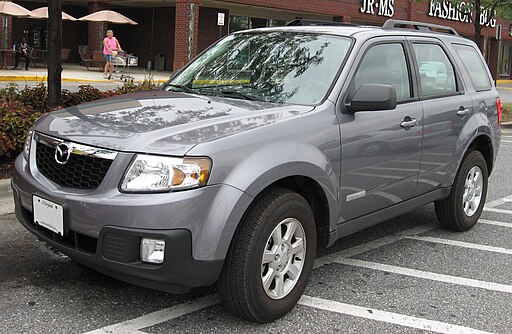
Mazda Tribute faults
The Mazda Tribute, a compact SUV produced between 2000 and 2011 (in collaboration with Ford, sharing a platform with the Ford Escape and Mercury Mariner), is known for several recurring faults. While some issues vary depending on the model year and engine type, many are well-documented by mechanics, owners, and consumer reports. Here’s a breakdown of common and known faults by category:
🛠️ Engine & Drivetrain Issues
1. Coil-on-Plug Ignition Coil Failure
- Symptoms: Misfires, rough idling, loss of power, and check engine light.
- Cause: Moisture ingress due to poor sealing, particularly on rear bank coils (on V6 engines).
- Fix: Replace faulty coils and often spark plugs; sometimes the PCM (Powertrain Control Module) gets damaged and needs replacement.
2. PCM Failure (Powertrain Control Module)
- Symptoms: Stalling, misfires, rough running.
- Cause: Coil failure often leads to voltage spikes damaging the PCM.
- Fix: Expensive; requires a new or refurbished PCM and often new ignition coils.
3. Idle Air Control (IAC) Valve Problems
- Symptoms: Engine stalling when idling, especially when cold or during deceleration.
- Fix: Cleaning or replacing the IAC valve.
⚙️ Transmission Issues
1. Transmission Slipping / Failure (Automatic)
- Symptoms: Hard shifts, slipping between gears, transmission not engaging.
- Affected Years: Common in 2001–2005 models.
- Cause: Wear and internal component failure; some had weak torque converters.
- Fix: Rebuild or replace transmission.
2. 4WD / AWD System Faults
- Symptoms: Grinding noises, failure to engage or disengage 4WD.
- Cause: Transfer case issues or faulty sensors/actuators.
- Fix: Diagnosis and part replacement; sometimes requires transfer case servicing.
🚗 Suspension & Steering
1. Lower Control Arm Rust / Failure (especially in Rust Belt areas)
- Symptoms: Clunking noises, unstable handling, alignment issues.
- Cause: Poor corrosion protection.
- Fix: Replace the control arm; Mazda recalled some 2001–2004 models.
2. Power Steering Leaks
- Symptoms: Whining noises, difficulty steering, fluid on the ground.
- Cause: Failing hoses, seals, or power steering pump.
- Fix: Replace leaking components.
🧊 Cooling System
1. Radiator and Hose Leaks
- Symptoms: Overheating, coolant smell, visible drips or puddles.
- Fix: Replace radiator, hoses, and possibly thermostat.
2. Thermostat Housing Cracks
- Symptoms: Coolant leaks, overheating.
- Cause: Brittle plastic housings (especially on V6 models).
- Fix: Replace with updated part, often metal aftermarket alternatives.
⚡ Electrical Issues
1. Alternator Failure
- Symptoms: Battery warning light, dead battery, dim lights.
- Fix: Replace alternator (often before 100k miles).
2. Window Regulators and Switches
- Symptoms: Windows stop working or fall into the door.
- Fix: Replace faulty window regulator or motor.
🔥 Recalls & Known Campaigns
- 2001–2004 Lower Control Arm Corrosion Recall – Especially in northern states.
- 2005 Fuel Tank Leak Recall – Risk of fire due to a cracked fuel tank.
- 2008–2010 Brake Master Cylinder Cap Recall – Brake fluid leak risk, potentially causing fire.
💡 General Reliability Notes
- The 2.3L I4 engine is more reliable than the 3.0L V6, which has more ignition and cooling-related issues.
- Tribute models were generally solid for their time, but maintenance history is key — poorly maintained examples often suffer from the faults above.
Mazda Tribute as a used car
Mazda Tribute as a Used Car: A Practical and Familiar Compact SUV
The Mazda Tribute is a compact SUV that enjoyed a solid, if somewhat understated, presence in Mazda’s lineup from 2000 to 2011. Often overshadowed by its mechanical twin—the Ford Escape—the Tribute offered an alternative with a sportier badge and slightly tweaked styling, aimed at buyers who valued a more refined approach to the affordable SUV formula.
Designed during the era of rising crossover popularity, the Mazda Tribute combines the utility of an SUV with car-like handling and a reasonably comfortable ride. It was positioned below the larger Mazda CX-9 and later the CX-5, and aimed to serve as an urban-friendly SUV with light off-road capability, solid towing power, and decent fuel efficiency for its class.
Overview
The Mazda Tribute shares most of its underpinnings and drivetrain options with the Ford Escape and, to a lesser extent, the Mercury Mariner. Despite badge engineering, the Tribute featured unique front-end styling, different suspension tuning, and slightly revised trim levels across the years. It was a five-passenger SUV with front- or all-wheel drive and a choice of four- or six-cylinder engines, offering utility-minded consumers a practical and budget-friendly option in the used SUV market.
Generations and Trim Levels
There are two major generations of the Mazda Tribute:
- First Generation (2001–2006)
- Second Generation (2008–2011)
Note: The 2007 model year was skipped, and there was a significant refresh in 2008.
Trim levels varied by market but typically included:
- i Sport / s Sport (base)
- i Touring / s Touring
- i Grand Touring / s Grand Touring
Here, “i” designates four-cylinder models, and “s” designates V6 variants.
Technical Specifications
First Generation (2001–2006)
Platform: CD2 platform (shared with Ford Escape)
Engines:
- 2.0L Zetec DOHC I4 (2001–2004)
- Power: 130 hp @ 5,400 rpm
- Torque: 135 lb-ft @ 4,500 rpm
- 3.0L Duratec V6 (2001–2006)
- Power: 200 hp @ 6,000 rpm
- Torque: 193 lb-ft @ 4,850 rpm
Transmissions:
- 5-speed manual (mostly with 4-cylinder)
- 4-speed automatic (common across all engines)
Drivetrain: FWD or optional AWD
Fuel Economy:
- 2.0L I4: ~22–26 mpg (combined)
- 3.0L V6: ~18–22 mpg (combined)
Towing Capacity:
- Up to 3,500 lbs with V6 models
Dimensions:
- Wheelbase: 103.1 in
- Length: 173.0–175.2 in
- Curb Weight: ~3,200–3,600 lbs
Second Generation (2008–2011)
The 2008 update brought improved interior quality, updated exterior styling, and new engine options with better fuel economy and emissions compliance.
Engines:
- 2.3L MZR DOHC I4 (2008)
- Power: 153 hp @ 5,800 rpm
- Torque: 152 lb-ft @ 4,250 rpm
- 2.5L MZR DOHC I4 (2009–2011)
- Power: 171 hp @ 6,000 rpm
- Torque: 171 lb-ft @ 4,500 rpm
- 3.0L Duratec V6 (2008–2011, updated version)
- Power: 240 hp @ 6,550 rpm
- Torque: 223 lb-ft @ 4,300 rpm
Transmissions:
- 5-speed manual (rare)
- 4-speed automatic (early models)
- 6-speed automatic (introduced 2009+)
Fuel Economy:
- 2.5L I4: 22–28 mpg combined
- 3.0L V6: 18–25 mpg combined
Interior & Features:
- Optional leather seats
- Bluetooth (later years)
- Sunroof
- Heated mirrors
- Navigation (rare)
- Side curtain airbags and stability control (post-2008 models)
Driving Impressions
The Mazda Tribute drives more like a tall wagon than a trucky SUV, thanks to its unibody construction and car-based platform. The first-generation V6 models have enough power for highway cruising and light towing, though they can feel a bit underbraked and unrefined under stress. The updated second-generation V6 significantly improves acceleration and smoothness, especially when paired with the 6-speed automatic.
Handling is composed, if not exactly sporty, with predictable body roll and decent feedback through the steering. AWD models provide peace of mind in slippery conditions but lack low-range gearing, so off-road capabilities are limited to gravel paths and snowy roads.
Reliability and Common Issues
The Mazda Tribute is generally considered moderately reliable, especially in four-cylinder configurations. However, some issues have cropped up, particularly in earlier models or high-mileage examples.
Known Problems Include:
- Transmission failure (especially early 4-speed automatics)
- Coil pack and ignition misfires (common on V6 engines)
- Cracked intake manifolds in V6 models (causing vacuum leaks and check engine lights)
- Rear brake wear (due to undersized rotors or caliper issues)
- Steering column failures or excessive play in some 2008+ models
- Rust and corrosion on rear wheel arches and underbody (especially in salt-belt regions)
- Faulty fuel filler neck causing check engine lights (Evaporative Emissions codes)
Later Tribute models (2009–2011) generally enjoy better build quality and fewer mechanical issues thanks to updates inherited from Ford’s platform refresh.
Ownership Costs and Maintenance
The Tribute benefits from readily available and inexpensive parts, thanks to its shared DNA with the Ford Escape. Maintenance is straightforward, and most independent mechanics are familiar with its systems. The V6 models may incur slightly higher running costs due to fuel consumption and the potential for coil or transmission issues, but the overall cost of ownership is reasonable.
Key maintenance items:
- Timing chain (no belt to replace, which is a plus)
- Transmission fluid (important to change regularly)
- Suspension components (control arms and bushings can wear)
- Brake servicing (rear brakes may wear faster than expected)
Pros and Cons of a Used Mazda Tribute
Pros:
- Practical and versatile for families or outdoor lifestyles
- Strong V6 performance (especially 2009+)
- Good cargo space and towing capacity
- Relatively low used prices
- Parts compatibility with Ford Escape
- Decent reliability in later models
Cons:
- Some models suffer from transmission or electrical issues
- Cabin materials in early years are dated and plasticky
- No third-row seating
- AWD system is light-duty only
- Not as fuel-efficient as modern compact SUVs
Final Verdict
The Mazda Tribute may not be the flashiest used SUV on the market, but it remains a sensible and capable choice for budget-conscious buyers who need reliable transportation with good utility. While early models are best approached with caution—particularly if they have high mileage and limited service records—the 2009–2011 versions offer better engines, transmissions, and overall refinement.
If you’re in the market for a compact SUV with a traditional look, strong utility, and proven mechanicals, a well-maintained Mazda Tribute could make a great addition to your driveway. Just be sure to check for common wear points, verify service records, and aim for a post-refresh model if possible.
