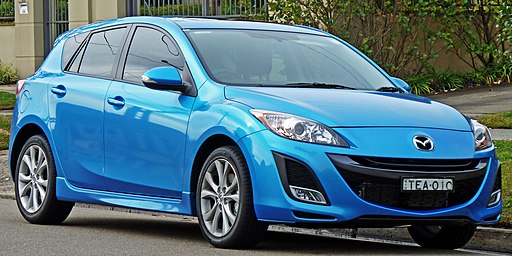
Mazda3 as a Used Car: A Complete Buyer’s Guide
The Mazda3 is one of the most interesting choices in the used family-car market because it manages to combine qualities that are not always found together. It is practical enough for everyday family use, economical enough to make sense as a commuter, reliable enough to compete with some of the best Japanese alternatives, and genuinely enjoyable to drive. Unlike many compact hatchbacks that prioritize comfort or low manufacturing cost above everything else, the Mazda3 has traditionally placed a strong emphasis on steering feel, chassis balance and driver involvement. That character has remained one of its defining features through several generations. Used-car reviewers have repeatedly praised the Mazda3 for its handling, build quality and value, while the later Skyactiv-powered cars added improved efficiency and a more sophisticated interior.
For a buyer looking at a Mazda3 today, however, there is an important distinction between buying the model and buying a particular example. The earliest Mazda3s are now old enough for condition to matter more than the original specification. A well-maintained petrol Mazda3 with a documented history can be an excellent long-term purchase, whereas a neglected diesel or rusty example can quickly become expensive. The Mazda3 is therefore not a car that should be purchased purely on reputation. A careful inspection, a test drive and a check of the service history are essential, especially when looking at older second-generation cars.
What Is the Mazda3?
The Mazda3 is Mazda’s compact family car, positioned above the smaller Mazda2 and below larger models such as the Mazda6. It has been sold as both a hatchback and a saloon, with different engines, transmissions and equipment levels depending on the generation and market. The first-generation Mazda3, known internally as the BK, appeared in the early 2000s. The second generation, or BL, followed for the 2009 model year, and the third-generation BM/BN arrived from 2014. Each generation brought improvements in refinement, safety and technology while retaining the basic Mazda philosophy of making a family car that was enjoyable to drive.
The second-generation Mazda3 is particularly interesting as a used purchase because it offers a relatively modern driving experience without the complexity of many newer cars. The model was closely related to the Ford Focus underneath, and reviewers praised its handling, solid construction and value for money. The third-generation car moved the formula further toward premium territory, introducing Mazda’s Skyactiv technologies, a lighter platform and a more sophisticated interior. The 2014 redesign also brought both hatchback and saloon body styles and continued Mazda’s emphasis on driving enjoyment.
Why Buy a Mazda3 as a Used Car?
It Is More Fun to Drive Than Many Rivals
The Mazda3’s greatest strength is arguably its chassis. While a Ford Focus is also well known for its handling, the Mazda3 offers a distinctive combination of precise steering, a relatively light feel and responsive suspension. Used-car reviews of the second-generation model repeatedly identify handling as one of its major attractions, and Autocar described the car as genuinely entertaining when driven on roads with bends and changes in elevation.
This does not mean that the Mazda3 is uncomfortable or impractical. Instead, it feels as though its engineers considered the driver as well as the passengers. The steering has enough precision to make positioning the car easy, while the chassis remains composed when driven enthusiastically. If you enjoy driving but need something capable of carrying passengers and luggage, this is one of the Mazda3’s biggest advantages over more appliance-like alternatives.
Reliability Is Generally Strong
Reliability is another reason the Mazda3 deserves consideration. Used-car surveys have generally found the petrol-powered cars dependable, and the second-generation model has developed a particularly good reputation for robust mechanical components. What Car? describes the 2009–2013 Mazda3 as reliable overall, with few common problems, although it specifically warns buyers to be more cautious with diesel versions.
The third-generation Mazda3 has also performed strongly in reliability surveys, with petrol versions particularly impressive in recent used-car assessments. Naturally, reliability at this age depends heavily on maintenance. Oil changes, cooling-system maintenance, brakes, suspension and other wear items cannot be ignored simply because Mazda has a good reputation.
It Offers Good Value
The Mazda3 has historically occupied an interesting position between mainstream and slightly more distinctive choices. It has never been as common as a Volkswagen Golf or Ford Focus in many European markets, yet it offers broadly comparable practicality and equipment. That means used buyers can often get a well-equipped car without paying a premium simply for a fashionable badge.
The second-generation model in particular can be excellent value because its age makes it relatively inexpensive, while its basic driving experience still feels modern enough for everyday use. What Car? highlights its combination of good value and reasonable running costs, while also noting that older Mazda servicing arrangements could be inexpensive.
Which Mazda3 Engine Should You Choose?
The Naturally Aspirated Petrol Engines Are the Safe Bet
For many used buyers, the naturally aspirated petrol engines are the most attractive option. The second-generation European Mazda3 was offered with a 1.6-litre petrol producing approximately 105 hp and a 2.0-litre petrol producing around 150 hp, although exact outputs varied by market.
The 1.6-litre is perfectly adequate for normal commuting but can feel somewhat slow when the car is heavily loaded. Its modest torque means that the driver sometimes needs to work the gearbox, especially on hills or when overtaking. The 2.0-litre is therefore a much better choice for buyers who value effortless performance, particularly if a good example is available at a sensible price.
The major advantage of these petrol engines is their relative simplicity. A naturally aspirated petrol engine does not have the same turbocharger, particulate-filter and high-pressure diesel-injection concerns that can make an old diesel more expensive to maintain.
Skyactiv Petrol Engines Are Particularly Attractive
The third-generation Mazda3 introduced Mazda’s Skyactiv approach, which combined efficient naturally aspirated petrol engines with high compression ratios, lightweight engineering and efficient transmissions. Depending on market, the range included a 2.0-litre engine and, in some markets, a larger 2.5-litre unit. The North American 2014 Mazda3, for example, offered a 2.0-litre with 155 hp and a 2.5-litre producing 184 hp.
These engines are one of the strongest reasons to consider a later Mazda3. They offer respectable fuel economy without relying on a small turbocharged engine, while the six-speed manual and automatic transmissions are well suited to the car. For a buyer wanting a used car that still feels relatively modern, a petrol Skyactiv Mazda3 is an especially appealing choice.
Be More Careful With Diesel Models
Diesel Mazda3s can make sense for drivers who regularly cover long distances, but they require a more thorough inspection. The 1.6-litre diesel in the second-generation car can suffer from injector problems, while its particulate-filter system introduces additional maintenance requirements. What Car? specifically advises buyers to pay attention to warning lights and the condition of the particulate-filter system, and notes that injector replacement can be costly.
Later diesel engines are not automatically bad either, but the same basic rule applies: do not buy an old diesel simply because the fuel economy looks attractive. If the vehicle has spent years making short urban journeys, the emissions system may have had a much harder life than one used regularly on longer trips. A petrol Mazda3 is generally the more straightforward choice for low and medium annual mileage.
What Is the Mazda3 Like Inside?
The Interior Is Functional Rather Than Luxurious in Older Cars
The second-generation Mazda3’s interior shows its age more clearly than its mechanical design. Hard plastics are noticeable, and the dashboard can look busy compared with newer vehicles. Nevertheless, the controls are generally sturdy, logical and easy to use, while the driving position is one of the car’s strengths. What Car? praised the sturdy feel of the controls but criticized the hard dashboard plastics and somewhat busy arrangement of buttons.
That distinction is important when shopping for an older car. A dated interior does not necessarily mean poor quality. In fact, a well-preserved Mazda3 can feel reassuringly solid even when the design is clearly from another era. Check the condition of the seats, steering wheel, gear lever and switches because excessive wear can tell you a lot about the car’s previous use.
The third-generation Mazda3 is a significant improvement in this area. Its cabin has a more sophisticated design, better materials and a stronger premium feel, with higher trims offering features such as Bose audio, heated leather seating, touchscreen infotainment and head-up display depending on market.
Hatchback or Saloon?
Both body styles have their advantages. The hatchback is the more versatile choice for most owners because the large rear opening makes it easier to load bulky objects. The saloon has a conventional boot and can be attractive to buyers who prioritize luggage space and a more traditional appearance.
The second-generation hatchback offered approximately 340 litres of boot space, although its sloping roof reduced rear headroom somewhat. In practice, it is large enough for ordinary family use, but buyers with frequent luggage-heavy trips may find a larger estate car more convenient.
What Problems Should You Check?
Rust Deserves Special Attention
Corrosion is one of the most important areas to inspect on an older Mazda3. The mechanical reliability of the second-generation car is generally good, but used-car testing has identified corrosion protection as a weakness, particularly underneath the car and in hidden areas.
Inspect the wheel arches, sills, floor, suspension mounting areas, door bottoms and underside carefully. If possible, have the vehicle lifted so you can see the condition of the subframes and other structural areas. Do not assume a clean-looking exterior means the underside is equally healthy.
This is particularly important in countries where roads are heavily salted during winter. Surface corrosion on an exhaust component is one thing; structural corrosion around suspension or body mounting points is a completely different proposition.
Check the Suspension and Steering
A test drive should include rough roads as well as smooth ones. Listen for knocking, rattling and humming noises, and pay attention to how the car responds to bumps. Uneven tyre wear can indicate worn suspension or incorrect alignment.
The Mazda3’s sporty suspension is part of its appeal, but this means worn components can have a noticeable effect on the driving experience. A car that feels vague, pulls to one side or bounces excessively may need more than a simple wheel alignment.
Inspect the Diesel System Carefully
If you choose a diesel Mazda3, investigate the particulate-filter system, injectors and service history carefully. Warning lights should never be dismissed as a minor inconvenience. What Car? notes that diesel particulate-filter problems can lead to costly repairs, while injector faults are a known issue on some 1.6-litre versions.
Ask the seller how the car was used. A diesel that regularly travelled hundreds of kilometres on the motorway is a very different proposition from one that spent its entire life making five-kilometre urban trips.
Check Recalls and Electronics on Newer Cars
Later Mazda3s are generally very reliable, but electronic systems should still be tested. Infotainment, reversing cameras, navigation and other electronic equipment can develop faults as the car ages. Used-car information also identifies specific recalls and software-related issues affecting certain later-production cars, making it important to verify that recall work has been completed.
Before buying, test the touchscreen, Bluetooth connection, reversing camera, parking sensors, climate control, electric windows and every warning-light function. A specialist or Mazda dealer can check the vehicle’s history and outstanding recall work using the VIN.
How Does the Mazda3 Compare With Its Rivals?
The Mazda3 sits in a highly competitive class containing the Volkswagen Golf, Ford Focus, Toyota Corolla, Honda Civic, Hyundai i30 and Kia Ceed. Each has its own strengths. The Golf has a more traditionally premium interior, the Focus is renowned for its handling, the Civic offers excellent practicality and the Toyota has a strong reputation for reliability.
The Mazda3’s advantage is balance. It is not necessarily the roomiest, quietest or most economical car in the class, but it performs well across several categories while providing a more engaging driving experience than many ordinary family cars. Used-car reviewers have repeatedly identified this combination of handling, value and reliability as one of its defining characteristics.
For buyers who want the least complicated ownership experience, a naturally aspirated petrol Mazda3 is particularly compelling. For those who want modern efficiency and a more premium cabin, the third-generation Skyactiv model is worth stretching the budget for.
What Should You Do on a Test Drive?
Start by asking to see the car with the engine cold. A seller who has already warmed it up may be hiding a starting problem, excessive smoke or an unusual noise. The engine should start promptly and settle into a stable idle. Look at the dashboard for warning lights and make sure they illuminate when the ignition is switched on and then disappear once the engine starts.
During the drive, test the clutch and gearbox carefully. Manual changes should be smooth, while an automatic transmission should engage drive and reverse without excessive delay or harshness. Accelerate through the rev range and check for hesitation, misfires or unusual noises.
Drive over an uneven surface and listen to the suspension. Then test the brakes progressively, checking whether the car remains straight. At higher speeds, listen for wheel-bearing noise and wind noise, and make sure the steering does not vibrate.
Finally, inspect the car after the drive. Look underneath for fresh leaks, examine the tyres for uneven wear and check the engine bay for evidence of poor maintenance. If you are serious about buying, paying for an independent inspection is money well spent.
Is the Mazda3 a Good Used Car?
The Mazda3 is one of the stronger choices for anyone looking for a used family hatchback that offers more personality than the average compact car. It combines good reliability with enjoyable handling, sensible dimensions and a wide selection of engines and equipment. The second-generation car is particularly attractive to buyers on a tighter budget, while the third-generation model offers a substantial improvement in interior quality, technology and efficiency.
The biggest warning is that not every Mazda3 is equally desirable. Rust can be a significant issue on older cars, diesel versions need more careful investigation, and suspension components inevitably wear with age. On newer cars, electronic systems and outstanding recalls should also be checked. These are not reasons to reject the Mazda3; they are reasons to choose carefully.
For most buyers, the ideal used Mazda3 is a petrol-powered car with a complete service history, clean bodywork, healthy suspension and evidence of regular maintenance. The 2.0-litre petrol is a particularly attractive second-generation choice, while a later Skyactiv-G petrol model is arguably the best option for buyers who want a more modern car. The diesel should be reserved for drivers whose mileage and driving pattern genuinely justify it.
Ultimately, the Mazda3‘s biggest advantage is that it does not force you to choose between sensible transportation and driving enjoyment. It can carry a family, handle everyday commuting, deliver respectable fuel economy and still make a winding road enjoyable. That combination has helped the Mazda3 remain a compelling used car long after its original showroom appeal has faded.
Mazda3 Technical Specifications
Specifications vary significantly according to generation, market, engine and trim. The table below therefore uses representative specifications from the second-generation Mazda3 (2009–2013) and third-generation Mazda3 (2014 onward) rather than suggesting that every Mazda3 has identical figures.
| Specification | Mazda3 1.6 Petrol | Mazda3 2.0 Petrol | Mazda3 2.0 Skyactiv-G |
|---|---|---|---|
| Representative generation | 2nd (BL) | 2nd (BL) | 3rd (BM/BN) |
| Approx. production period | 2009–2013 | 2009–2013 | 2014 onward |
| Engine | 1.6L inline-4 petrol | 2.0L inline-4 petrol | 2.0L inline-4 Skyactiv-G |
| Displacement | 1,598 cc | approx. 1,999 cc | 1,998 cc |
| Aspiration | Naturally aspirated | Naturally aspirated | Naturally aspirated |
| Typical power | 105 hp | approx. 150 hp | 155 hp |
| Typical torque | 145 Nm | approx. 187–191 Nm | approx. 200 Nm |
| Transmission | 5-speed manual | 5/6-speed manual or automatic | 6-speed manual or automatic |
| Drive | Front-wheel drive | Front-wheel drive | Front-wheel drive |
| Body styles | Hatchback / saloon | Hatchback / saloon | Hatchback / saloon |
| Seating | 5 | 5 | 5 |
| Approx. length | 4,460 mm | 4,460 mm | approx. 4,460 mm |
| Approx. wheelbase | 2,640 mm | 2,640 mm | approx. 2,700 mm |
| Approx. boot capacity | 340 L hatchback | 340 L hatchback | around 350–360 L hatchback |
| Timing system | Chain | Chain | Chain |
| Character | Economical, adequate | Strong all-rounder | Efficient and refined |
| Best suited to | Budget commuting | Mixed driving | Everyday/family use |
Bottom line: the Mazda3 is a particularly good used-car choice if you want reliability without sacrificing driving enjoyment. For older examples, prioritize rust-free bodywork and service history; for newer examples, look for a well-maintained petrol Skyactiv model with complete recall documentation. If you can find one in genuinely good condition, the Mazda3 offers an unusually satisfying combination of practicality, durability and driver appeal.
_SKYACTIV_hatchback_(2014-03-15)_01.jpg)