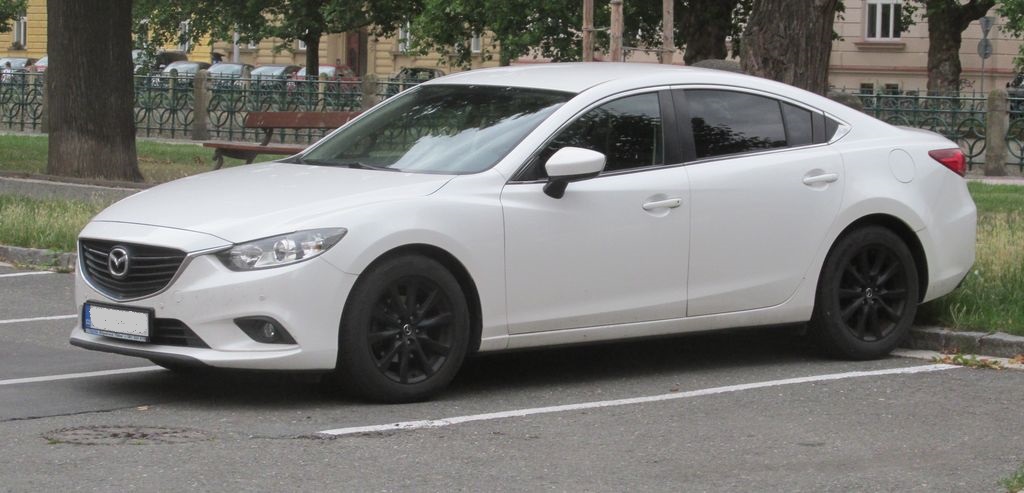
Mazda6 as a Used Car: Is This Japanese Family Car Still a Smart Buy?
The Mazda6 has always occupied an interesting position in the family-car market. It has never been quite as conservative as a Toyota Avensis, quite as mainstream as a Volkswagen Passat, or quite as premium as a BMW 3 Series, yet it has consistently offered a combination of attractive styling, good driving characteristics, useful practicality and relatively straightforward engineering. That makes the Mazda6 particularly interesting as a used car, because depreciation has made older examples affordable while the underlying design can still feel remarkably modern. However, not every Mazda6 is equally desirable. Engine choice, generation, maintenance history and, above all, corrosion can make the difference between an excellent used car and an expensive mistake.
For a used-car buyer today, the Mazda6 is best considered as a broad family of cars rather than one single model. The first generation, known internally as GG/GY, dates from the early 2000s; the second-generation GH arrived in 2008; and the third-generation GJ/GL followed from 2012/2013. The second and third generations are particularly relevant to buyers looking for a modern enough daily driver without paying new-car prices. The GH, for example, was offered as a saloon, hatchback and estate, while the later GJ continued the estate and saloon concept with a much more contemporary design.
Why Consider a Used Mazda6?
The first attraction is the way the Mazda6 drives. Unlike some family cars that prioritise softness and isolation above everything else, the Mazda6 has traditionally retained a degree of driver involvement. Steering tends to feel relatively direct, the manual gearboxes are pleasant to use and the chassis is capable of handling winding roads without making the car feel like a specialised sports sedan. This character is one of the reasons the model has developed such a loyal following among drivers who need a practical family car but do not want something completely anonymous.
The second attraction is practicality. The Mazda6 is a proper five-seat family car, and the estate versions in particular can be excellent alternatives to SUVs. The second-generation GH estate, for example, is around 4.8 metres long and has a quoted luggage capacity of about 519 litres in one common configuration. The hatchback provides a useful compromise between the appearance of a saloon and the loading flexibility of an estate.
There is also the question of value. A used Mazda6 can offer plenty of equipment, a good-looking body and a relatively sophisticated driving experience for considerably less money than an equivalent premium German car. The important qualification is that purchase price should never be the only consideration. An inexpensive Mazda6 with serious corrosion or a neglected diesel engine can become considerably more expensive than a better-maintained car that initially costs more.
Mazda6 Generations: Which One Makes the Most Sense?
First Generation GG/GY
The first-generation Mazda6 is now an old car, and that changes the buying equation considerably. When it was new, it was praised for its handling, practicality and attractive styling, but surviving examples are now old enough that condition matters more than specification. The biggest concern is corrosion. The first-generation Mazda6 developed a particularly strong reputation for rust, with corrosion affecting body panels, sills, structural areas and suspension-related components.
This generation can still make sense as a cheap project or inexpensive second car, but it should not be approached as a normal budget purchase. A low asking price can conceal significant welding or mechanical expenditure. If you are considering one, an inspection on a lift is essential. The petrol engines can be preferable to the older diesels, but even a mechanically excellent example is not worth buying if the body structure is badly corroded.
Second Generation GH
For many buyers, the GH-generation Mazda6 represents an attractive middle ground. Introduced in 2008, it brought improved refinement and remained available in several body styles. The basic dimensions of the hatchback are approximately 4,755 mm long, 1,795 mm wide and 1,440 mm high, while the estate stretches to approximately 4,785 mm and rises to around 1,490 mm.
The GH is fundamentally a good used car, but corrosion remains the major issue. Used-car assessments have specifically highlighted rust on the underside, while buyer guides also point to relatively weak corrosion protection. In other words, the fact that a GH looks clean from above does not mean it is structurally healthy underneath.
Third Generation GJ/GL
The third-generation Mazda6 is probably the most appealing choice for buyers who want a modern-looking used car without moving into the newest price bracket. Its Kodo-inspired design has aged particularly well, and the interior is considerably more contemporary than that of the GH. The petrol Skyactiv engines are also one of the strongest arguments in favour of this generation.
However, the GJ is not completely free of problems. Corrosion protection improved compared with earlier generations, but used-car inspections have still found corrosion developing underneath the vehicle, particularly around areas of the underbody. Suspension components, dampers and other age-related items can also require attention.
Which Mazda6 Engine Should You Buy?
Petrol Engines: Usually the Safer Choice
If simplicity and long-term ownership are priorities, petrol is generally the most attractive fuel type in a used Mazda6. This is particularly true for buyers who do not cover huge annual mileage. Naturally aspirated petrol engines avoid many of the expensive components found in modern diesels, including diesel particulate filters and high-pressure diesel injection systems.
The GH generation offered engines including 1.8, 2.0 and 2.5-litre petrol units. The 2.0-litre MZR is an especially sensible compromise. In one European specification it produces 147 hp and 184 Nm and uses a six-speed manual transmission. It provides enough performance for normal family use without the additional complexity of a turbocharged engine.
The 2.5-litre petrol engine is worth considering if you value performance more highly. Fuel consumption is naturally higher, but the extra displacement makes the car more effortless when overtaking or carrying several passengers and luggage.
Skyactiv-G Petrol Engines
The third-generation Mazda6 introduced Mazda’s Skyactiv-G petrol engines, including 2.0-litre versions with different power outputs and a larger 2.5-litre engine in some markets. These engines are among the most attractive powertrains in the range for a used buyer who wants to keep ownership relatively uncomplicated. Recent used-car buying advice on the GJ/GL specifically identifies the 2.0 Skyactiv-G in 145- and 165-hp versions as a particularly dependable choice.
That does not mean a petrol Mazda6 is maintenance-free. Direct-injection engines can develop deposits in the intake system over time, and used-car reports mention occasional issues involving high-pressure fuel systems, oil pressure and engine mounts. Nevertheless, the overall risk profile is generally more attractive than that of the 2.2 diesel, especially for drivers whose journeys are predominantly short or urban.
What About the Mazda6 Diesel?
2.0 MZR-CD
The older 2.0 diesel can be economical and offers strong torque, but it needs careful inspection. One well-documented problem is oil dilution, where fuel can enter the engine oil during DPF regeneration. If the oil level rises rather than falls, the situation should be investigated immediately. Used-car reliability information has specifically highlighted this problem on the older 2.0 diesel.
This is one of the reasons a diesel Mazda6 should not be selected simply because its advertised fuel consumption looks attractive. A diesel that has spent its life doing short journeys can be a much worse proposition than a petrol car with higher fuel consumption.
2.2 Diesel
The 2.2 diesel became an important engine in later Mazda6 models and delivers strong torque and good motorway performance. Unfortunately, it has developed a reputation for expensive problems when maintenance has been neglected. Used-car reports cite concerns involving turbochargers, injector seals, carbon accumulation, EGR components and oil-pressure-related problems.
That does not mean every 2.2 diesel is unreliable. A well-maintained example with comprehensive records can run successfully for many kilometres. The problem is that the potential cost of several diesel-system failures can overwhelm the financial benefit of choosing diesel in the first place. For a high-mileage motorway driver, it can still make sense; for a low-mileage urban driver, a petrol Mazda6 is usually much easier to justify.
Common Mazda6 Problems to Check
Rust Is the Number-One Inspection Point
If there is one lesson that should stay with every Mazda6 buyer, it is this: inspect the underside.
Corrosion has affected multiple Mazda6 generations. On older cars it can become severe enough to affect structural areas, while even the GJ generation has been reported with corrosion beginning underneath the car. The problem is especially dangerous because a vehicle can look excellent externally while rust is already developing around underbody components.
Never buy an older Mazda6 without checking the underside properly. Ideally, have the vehicle raised on a workshop lift and inspect the sills, subframes, suspension mounting points, brake lines and other exposed metal components. If there is substantial corrosion, obtain a repair estimate before making an offer rather than assuming it will be inexpensive to fix.
Suspension and Steering
A test drive should take place over different road surfaces. Listen for knocking from the front or rear suspension, particularly when crossing potholes or speed bumps. Steering should feel precise, with no excessive play or unusual noises. Used-car buying guides have also identified potential steering, suspension-bushing and mounting issues on higher-mileage cars.
These are not necessarily reasons to reject a Mazda6. Suspension components wear on virtually every older family car. The important question is whether the seller has priced the car realistically and whether several worn components are likely to require replacement simultaneously.
Gearbox and Clutch
Manual Mazda6 gearboxes are generally pleasant, but on an older car the clutch and gear-selection mechanism deserve attention. During a test drive, make sure all gears engage cleanly and that there is no excessive resistance or grinding. On automatic models, changes should be smooth both when accelerating gently and when demanding more performance.
Do not accept harsh automatic shifts simply because the car is old. Transmission repairs can be expensive, and unusual behaviour should be diagnosed before purchase.
Air Conditioning and Electronics
Test every electrical feature you can. Check the climate control, heated seats if fitted, electric windows, central locking, parking sensors, infotainment system, headlights and dashboard warning lights. Earlier Mazda6 models have been reported with air-conditioning problems and various smaller electrical or interior faults.
Individually these faults may be minor, but several neglected electrical problems are a useful indication that the previous owner has not maintained the vehicle carefully.
How to Buy a Used Mazda6
The best Mazda6 is not necessarily the newest or the one with the lowest mileage. A car with a documented service history, clean underside and healthy engine is generally a much safer investment than a superficially attractive example with an unexplained history.
Start by checking the vehicle’s history and service documentation. Look for evidence of regular oil changes and repairs rather than simply stamps in a service book. For diesel cars, ask specifically about DPF, EGR, injector and turbocharger work. For petrol cars, concentrate on general servicing, cooling-system condition, oil leaks and evidence of neglected maintenance.
Then inspect the body in daylight and, preferably, underneath on a lift. Uneven panel gaps, mismatched paint and corrosion around wheel arches can indicate previous repairs. On an estate, inspect the luggage compartment carefully for signs of water ingress. On any Mazda6, check the tyres for uneven wear because it can reveal suspension or alignment problems.
Finally, take a proper test drive. A ten-minute drive around the seller’s neighbourhood is not enough. The car should be driven from cold if possible, through town and at higher speeds, with hard acceleration, gentle braking and several changes of direction. This is when noises, vibrations, gearbox problems and engine hesitation are most likely to reveal themselves.
Is the Mazda6 a Good Used Car?
The Mazda6 can be an excellent used car, but it is not a model that should be purchased blindly. Its strengths are considerable: attractive styling, enjoyable handling, good practicality, comfortable long-distance ability and, in the right specification, relatively simple and durable petrol engines. The estate is especially appealing to families who want useful cargo space without moving into an SUV.
The main weakness is that Mazda’s historic corrosion problems cannot be ignored. This is particularly important with older GG/GY and GH cars, but even later GJ examples deserve a proper underbody inspection.
For most private buyers, a petrol Mazda6 is the safest starting point. A well-maintained 2.0-litre petrol GH can be an excellent budget family car, while the later 2.0 Skyactiv-G makes an even stronger proposition if your budget allows. The diesels are more complicated: they can be very good motorway cars, but only when their history and condition are convincing.
Ultimately, the Mazda6 rewards buyers who inspect carefully. Find a rust-free or properly preserved example with a documented service history and the right engine for your driving pattern, and you can end up with a used car that is practical enough for family life yet enjoyable enough that driving it never feels like a chore.
Mazda6 Technical Specifications
Because the Mazda6 has been sold in several generations, body styles and engine configurations, there is no single specification that applies to every used example. The table below focuses on representative European versions of the second-generation GH and third-generation GJ, which are among the most relevant Mazda6 models on today’s used market.
| Specification | Mazda6 GH 1.8 Petrol | Mazda6 GH 2.0 Petrol | Mazda6 GH 2.0 Diesel | Mazda6 GJ 2.0 Skyactiv-G |
|---|---|---|---|---|
| Generation | GH | GH | GH | GJ/GL |
| Approx. production era | 2008–2012 | 2008–2012 | 2008–2012 | 2012/13 onward |
| Engine | 1.8 MZR | 2.0 MZR | 2.0 MZR-CD | 2.0 Skyactiv-G |
| Displacement | 1,798 cc | 1,999 cc | 1,998 cc | 1,998 cc |
| Cylinders | 4 | 4 | 4 | 4 |
| Fuel | Petrol | Petrol | Diesel | Petrol |
| Typical power | 120 hp | 147 hp | 140 hp | 145–165 hp |
| Torque | — | 184 Nm | 330 Nm | Market dependent |
| Transmission | Manual | 6-speed manual | Manual | Manual / automatic |
| Drive | Front-wheel drive | Front-wheel drive | Front-wheel drive | Front-wheel drive |
| Length, approx. | 4,755 mm | 4,755 mm | 4,755 mm | Market/body dependent |
| Width, approx. | 1,795 mm | 1,795 mm | 1,795 mm | Approx. 1,840 mm |
| Height, hatchback approx. | 1,440 mm | 1,440 mm | 1,440 mm | Approx. 1,450 mm |
| Wheelbase | 2,725 mm | 2,725 mm | 2,725 mm | Approx. 2,830 mm |
| Seats | 5 | 5 | 5 | 5 |
| Fuel tank, representative GH | 64 litres | 64 litres | 64 litres | Around 62 litres |
| Boot, hatchback representative | 510 litres | 510 litres | 510 litres | Body/configuration dependent |
| Boot, estate representative | ~519 litres | ~519 litres | ~519 litres | Body/configuration dependent |
Final verdict: The Mazda6 is one of the more interesting used family cars for buyers who value driving enjoyment as much as practicality. Choose the car based on condition rather than badge or mileage, inspect the underside for corrosion, and be particularly selective with diesel versions. For many private buyers, a well-maintained petrol model—especially a 2.0-litre—is the most convincing combination of performance, simplicity and long-term ownership value.
_%E2%80%93_Frontansicht,_14._April_2013,_D%C3%BCsseldorf.jpg)