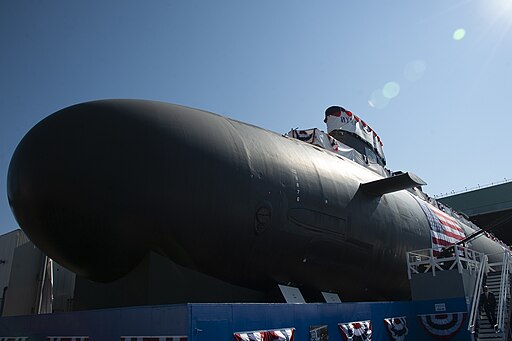
USS Hyman G. Rickover (SSN-795)
USS Hyman G. Rickover (SSN‑795) is a cutting‑edge addition to the United States Navy’s fleet of nuclear‑powered fast attack submarines. Named in honor of Admiral Hyman G. Rickover, the “father of the nuclear navy,” this vessel carries forward a legacy of innovation, technological superiority, and unwavering commitment to national defense. As one of the latest variants in the Virginia‑class series, USS Hyman G. Rickover embodies advanced design features, stealth technologies, and a suite of modern combat systems that place her at the forefront of undersea warfare.
Historical Background and Legacy
The naming of USS Hyman G. Rickover pays tribute to a visionary leader whose influence shaped the nuclear propulsion program and revolutionized submarine operations. As the U.S. Navy continues to evolve to meet emerging global challenges, SSN‑795 represents the next step in a lineage of Virginia‑class submarines known for their operational versatility and cutting‑edge technology. Her construction builds on decades of experience, integrating lessons learned from previous classes while incorporating next‑generation innovations.
Design Philosophy and Operational Role
USS Hyman G. Rickover is designed to operate in a broad spectrum of maritime missions including anti‑submarine warfare, intelligence collection, strike operations, and special operations support. The design philosophy focuses on survivability, stealth, and multi‑domain flexibility. A streamlined hull, advanced acoustic dampening materials, and reduced magnetic signature ensure that the submarine can remain undetected in contested environments. This combination of features allows her to execute high‑risk missions with enhanced stealth and reliability.
Technical Specifications
Dimensions and Displacement
- Length: Approximately 377 feet (115 meters)
- Beam: Roughly 34 feet (10.4 meters)
- Draft: Estimated at around 32 feet (9.8 meters)
- Displacement: Nearly 7,800 tons when submerged
These dimensions strike an optimal balance between underwater agility and the ability to house advanced systems, ensuring that the submarine can operate effectively over extended periods during high‑intensity deployments.
Propulsion and Performance
At the heart of USS Hyman G. Rickover’s capabilities is her nuclear propulsion system, which provides unmatched endurance and speed. Key performance features include:
- Powerplant: A state‑of‑the‑art nuclear reactor powering a pump‑jet propulsion system
- Speed: Capable of exceeding 25 knots when submerged, enabling rapid repositioning and evasive maneuvers
- Range: Virtually unlimited range under water due to nuclear fuel, with the ability to sustain extended patrols without refueling
- Endurance: Designed for long‑duration missions, the submarine’s life support, and power management systems ensure operational readiness for months at a time
The combination of nuclear propulsion and advanced hydrodynamic design ensures that USS Hyman G. Rickover can swiftly navigate the vast and complex undersea environment while maintaining stealth.
Stealth, Sensors, and Communication Systems
Stealth is paramount in modern undersea warfare, and USS Hyman G. Rickover is engineered with multiple features to minimize detection:
- Acoustic Quieting: Advanced sound‑dampening technologies reduce noise from onboard machinery, ensuring an exceptionally low acoustic signature
- Radar and Sonar Systems: An integrated sensor suite, including next‑generation passive and active sonar arrays, provides comprehensive situational awareness. This system is critical for detecting enemy vessels, mapping the ocean floor, and conducting intelligence operations
- Electromagnetic Signature Reduction: Materials and design features lower the magnetic and infrared signatures, further complicating enemy detection efforts
- Communication Systems: Enhanced secure communications allow the submarine to exchange real‑time data with command centers and allied forces, ensuring coordinated multi‑domain operations even in challenging electronic warfare environments
Armament and Combat Systems
USS Hyman G. Rickover is equipped with a diverse array of weaponry that makes her a formidable asset in both offensive and defensive roles:
- Vertical Launch System (VLS): Capable of launching a variety of Tomahawk Land Attack Missiles (TLAMs) for precision strikes against high‑value targets on land, as well as other payloads suited for underwater warfare
- Torpedo Tubes: The submarine is armed with torpedo tubes that can deploy advanced heavyweight torpedoes and anti‑ship missiles, offering robust options for engaging enemy vessels and underwater threats
- Special Operations Support: Configured to deploy and recover Navy SEALs and special operations forces, the vessel features modular mission bays and enhanced covert insertion capabilities
The combat systems are integrated with a sophisticated battle management network, ensuring rapid target acquisition and engagement while maintaining interoperability with other elements of the fleet.
Crew, Automation, and Habitability
USS Hyman G. Rickover benefits from modern automation and ergonomic design that enhance crew performance and reduce workload during extended missions:
- Crew Size: Optimized to operate with a reduced but highly trained crew, thanks to automation in control and monitoring systems
- Integrated Displays: Advanced digital interfaces and command centers provide real‑time data on tactical, navigational, and engineering parameters
- Habitability: The submarine is designed to support crew endurance with improved living quarters, environmental controls, and recreational areas, ensuring high morale and operational efficiency during long deployments
Operational Impact and Future Enhancements
As part of the Virginia‑class lineage, USS Hyman G. Rickover is not only a key asset for current naval operations but also a platform that will evolve with future technological upgrades. Modular design allows for the integration of emerging technologies, such as next‑generation sensor systems and advanced weaponry, ensuring that she remains effective against evolving threats.
The operational versatility of USS Hyman G. Rickover makes her a critical component in deterring potential adversaries and protecting maritime interests worldwide. Her capabilities underscore the strategic shift towards multi‑domain operations where stealth, rapid response, and technological superiority converge to maintain global stability.
Conclusion
USS Hyman G. Rickover (SSN‑795) stands as a symbol of naval innovation and a fitting tribute to a pioneer whose legacy transformed undersea warfare. With her advanced nuclear propulsion, state‑of‑the‑art stealth features, comprehensive sensor suite, and versatile armament, she is poised to deliver unmatched performance in a rapidly changing security landscape. As the U.S. Navy continues to refine its strategies and embrace technological advancements, USS Hyman G. Rickover will undoubtedly play a pivotal role in shaping the future of undersea warfare, ensuring that the legacy of excellence in naval operations endures for generations to come.
_210731-N-UM744-111.jpg)