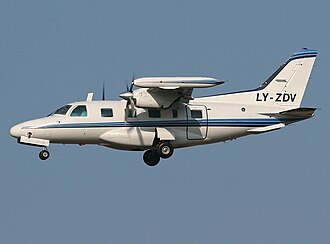
Mitsubishi MU-2: The Remarkable Story, Design, Performance, and Legacy of Japan’s Twin-Turboprop Aircraft
The Mitsubishi MU-2 is one of the most distinctive and recognizable twin-engine turboprop aircraft ever developed. Designed and manufactured in Japan by Mitsubishi Heavy Industries, the MU-2 earned a reputation for its unusual combination of compact dimensions, impressive speed, substantial payload capability, and excellent short-field performance. Introduced during the 1960s, it represented an ambitious effort by Japanese engineers to create a modern business and utility aircraft capable of competing in an increasingly sophisticated international aviation market. Its innovative engineering, unconventional aerodynamic characteristics, and powerful turboprop engines made it different from many of its competitors, while its versatility allowed it to serve business travelers, government organizations, military operators, and specialized aviation companies.
Although the MU-2 was originally conceived as a practical and economical aircraft for transportation and utility operations, it gradually became known for its high performance and distinctive flying characteristics. Its compact fuselage, relatively small wing, powerful engines, and sophisticated high-lift devices gave it a combination of cruise speed and low-speed capability that was unusual for an aircraft of its size. Unlike many traditional business aircraft that emphasized passenger comfort and straightforward handling above everything else, the MU-2 was designed around efficiency, performance, and operational flexibility. This engineering philosophy helped establish its identity and contributed to its long-lasting appeal among pilots and aviation enthusiasts.
Today, the Mitsubishi MU-2 remains an important aircraft in the history of Japanese aerospace engineering and international business aviation. Although production ended decades ago, numerous examples have continued operating around the world, demonstrating the durability of the original design and the dedication of the aviation community that supports it. The aircraft is also remembered for the discussions surrounding its handling characteristics and accident history, which led to significant improvements in pilot training, operational procedures, and safety awareness. Understanding the MU-2 therefore requires looking beyond its specifications and considering its development, engineering, operational history, strengths, limitations, and continuing influence on general aviation.
The History and Development of the Mitsubishi MU-2
The Origins of the MU-2 Project
The Mitsubishi MU-2 project emerged during a period when Japan was rebuilding and expanding its industrial and technological capabilities after World War II. During the 1950s and early 1960s, Japanese manufacturers increasingly looked toward advanced transportation technologies, including modern aircraft capable of serving commercial, governmental, and private customers. Mitsubishi Heavy Industries, which possessed a long history of aircraft engineering and manufacturing, recognized an opportunity to develop a modern turboprop aircraft that could compete internationally.
The aviation industry was undergoing a major technological transition at the time. Piston-powered aircraft remained widely used, but turbine technology was becoming increasingly attractive because of its greater power-to-weight ratio, improved reliability in many operating conditions, and potential for higher cruising speeds. Turboprop aircraft were particularly appealing because they combined the performance advantages of turbine engines with the efficient propeller propulsion needed for regional transportation and shorter runways. Mitsubishi decided to take advantage of this technological development by creating a compact twin-engine aircraft with business aviation and utility applications.
The result was the MU-2, a design that reflected a distinctly performance-oriented approach. Rather than simply adapting an existing piston-powered aircraft to turbine propulsion, Mitsubishi developed an aircraft around the requirements of turboprop operation. Its relatively small wing, high-mounted engines, and sophisticated flap system were central elements of the design. These features helped the aircraft achieve a high cruising speed while retaining useful low-speed characteristics, although they also contributed to handling qualities that required specialized pilot knowledge and training.
First Flight and Entry Into Service
The Mitsubishi MU-2 prototype first flew on September 14, 1963, marking an important milestone for the Japanese aircraft industry. The flight demonstrated the potential of Mitsubishi’s new twin-turboprop concept and initiated the testing and certification process necessary to bring the aircraft to market. The project was particularly significant because Mitsubishi was seeking to establish itself as a manufacturer capable of producing internationally competitive civil aircraft rather than concentrating exclusively on domestic industrial activities.
The aircraft subsequently entered production and began attracting attention outside Japan. Its compact design and performance made it suitable for operators who needed a fast aircraft without the size and operating costs associated with larger business turboprops. The MU-2 could transport passengers, carry cargo, support government missions, and operate in environments where a combination of speed, range, and runway flexibility was valuable.
One of the most important developments in the aircraft’s commercial history was its expansion into the North American market. The United States offered a large business aviation sector and a substantial network of smaller airports, creating favorable conditions for a fast, compact twin-turboprop aircraft. Mitsubishi’s relationship with American aviation distributors helped establish the MU-2 as an international product and introduced it to a broader customer base.
Production History and Aircraft Variants
Production of the MU-2 continued from the 1960s until 1986, during which time Mitsubishi introduced several versions designed to satisfy different customer requirements. These versions included short-fuselage and long-fuselage configurations, as well as models with different engine ratings, equipment arrangements, and performance characteristics. The variations allowed Mitsubishi to adapt the aircraft to different combinations of passenger capacity, payload, range, and operating requirements.
The short-body MU-2 models generally emphasized compactness and utility, while the stretched versions provided additional cabin space and greater passenger-carrying flexibility. Depending on the model, the aircraft could accommodate a relatively small group of passengers or be configured for specialized transportation duties. The different variants also reflected improvements in avionics, cabin equipment, and propulsion systems over the aircraft’s production life.
The final production aircraft left the manufacturing process in 1986. Although Mitsubishi no longer manufactures the MU-2, the aircraft has maintained a presence in the used-aircraft market. Its continued operation is supported by specialist maintenance organizations, experienced technicians, parts suppliers, and pilot training programs. This ongoing support network has been essential to preserving the aircraft’s operational usefulness long after the end of factory production.
Design and Engineering Characteristics
A Compact but Aerodynamically Sophisticated Aircraft
One of the most interesting aspects of the Mitsubishi MU-2 is its aerodynamic configuration. At first glance, the aircraft appears relatively small compared with many other business turboprops, but its performance capabilities are considerable. Its design emphasizes efficient high-speed flight, and several features distinguish it from conventional twin-engine aircraft.
The MU-2 has a relatively short and compact wing compared with aircraft that prioritize exceptionally gentle low-speed handling. A smaller wing can reduce aerodynamic drag during cruising flight, helping an aircraft achieve higher speeds. However, the advantages of a compact wing must be balanced against the need for sufficient lift during takeoff and landing. Mitsubishi addressed this challenge through the use of advanced high-lift devices, including full-span leading-edge slats and double-slotted flaps.
These systems increase the wing’s ability to generate lift at lower speeds. By changing the aerodynamic characteristics of the wing, the high-lift devices allow the aircraft to operate at speeds that would otherwise be difficult to achieve with its relatively small wing area. This arrangement is an important part of the MU-2’s distinctive performance profile and explains why its aerodynamic design cannot be understood simply by looking at wing size.
High-Mounted Engines and Twin-Turboprop Configuration
The MU-2 features two turboprop engines mounted high on the wings. This arrangement gives the aircraft a distinctive appearance and offers practical advantages for certain operating environments. Mounting the engines above the wing helps keep the propellers and engine installations away from some ground-level hazards, which can be useful when operating from less-developed airfields.
The engines drive propellers that provide the thrust necessary for takeoff, climb, and cruising flight. Turboprop propulsion is particularly effective at the speeds and altitudes typically associated with regional and business aviation. Compared with piston engines of similar mission capability, turbine engines can offer substantial power and favorable performance characteristics, although fuel consumption and maintenance costs must be considered as part of the overall operating economics.
The MU-2 was fitted with different versions of the Garrett TPE331 turboprop engine, depending on the model. This engine family became widely known in business aviation because of its compact design, power output, and suitability for twin-engine turboprop aircraft. The TPE331 is a fixed-shaft turboprop engine, and its response characteristics differ from those of some other turboprop designs. This distinction is relevant to understanding the aircraft’s power management and operating procedures.
The Importance of the MU-2’s Wing Design
The wing is arguably the most important component in understanding the MU-2’s performance and handling. Its relatively small surface area contributes to efficient high-speed flight, but it also means that pilots must understand the aircraft’s energy management requirements. Mitsubishi’s use of leading-edge slats and double-slotted flaps helps compensate for the wing’s compact dimensions during slower flight.
These high-lift systems are designed to increase lift when required, particularly during takeoff and landing. Their operation is closely connected to the aircraft’s flight configuration and approved operating procedures. The combination of slats and flaps creates a sophisticated aerodynamic system that allows the aircraft to achieve a useful balance between cruising performance and low-speed capability.
However, this design also means that the MU-2 should not be treated like a conventional light twin or a typical piston-powered aircraft. Pilots must understand the correct configuration, power settings, airspeed requirements, and handling procedures. The aircraft rewards precise operation and thorough preparation, making type-specific training especially important.
Performance and Flight Capabilities
Cruising Speed and Overall Performance
Speed is one of the characteristics most frequently associated with the Mitsubishi MU-2. For an aircraft of its general size and passenger capacity, it offers impressive cruising performance. Depending on the model, engine configuration, weight, altitude, and operating conditions, cruise speeds are generally in the region of approximately 250 to 300 knots.
This performance made the MU-2 attractive to business operators who needed to travel between cities efficiently. Its twin-turboprop configuration offered the ability to cover substantial distances in relatively short periods, making it a useful alternative to slower piston-powered aircraft. The aircraft’s speed also helped it compete in a market where business travelers increasingly valued direct transportation and reduced journey times.
The MU-2’s high-speed capabilities must nevertheless be understood in relation to its operational environment. Actual cruise performance depends on factors such as aircraft weight, atmospheric conditions, engine health, altitude, and fuel planning. Published maximum speeds should not be confused with speeds that can be maintained economically or safely under every operating condition.
Takeoff and Landing Performance
Another notable feature of the MU-2 is its ability to operate from relatively short runways when compared with many faster aircraft in its general category. Its high-lift wing system contributes significantly to this capability, allowing the aircraft to generate useful lift at lower speeds when correctly configured.
This capability provides operational flexibility, especially for businesses and organizations that need access to smaller regional airports. Instead of relying exclusively on major commercial airports, MU-2 operators can use a broader selection of airfields, depending on runway length, surface condition, elevation, weather, and aircraft weight.
Short-runway performance should never be interpreted as permission to operate from unsuitable airfields. Actual takeoff and landing distances must be calculated using the aircraft’s approved performance data, taking into account temperature, pressure altitude, wind, runway slope, surface conditions, and aircraft weight. The MU-2’s performance is impressive, but it remains subject to the same fundamental physical and regulatory limitations as every other aircraft.
Range and Endurance
The MU-2 was designed to support regional and medium-distance transportation missions. Depending on the variant, fuel capacity, payload, cruise settings, and reserve requirements, its range can extend to approximately 1,000 nautical miles or more under suitable conditions. Some configurations offer greater range potential than others, particularly when operating with a lighter payload and favorable atmospheric conditions.
This range made the aircraft practical for business travel between cities that might be poorly served by direct airline connections. It could also support transportation missions for organizations operating across large geographic regions. The aircraft’s combination of speed and range helped establish its reputation as a capable business turboprop.
Range figures must be interpreted carefully because aircraft manufacturers and operators may use different assumptions when publishing performance information. Maximum range, still-air range, practical mission range, and range with regulatory fuel reserves are not interchangeable measurements. For real-world operations, fuel planning must always follow the aircraft flight manual and applicable aviation regulations.
The Cabin and Passenger Experience
Interior Layout and Passenger Capacity
Although the Mitsubishi MU-2 is recognized primarily for its performance, its cabin was designed to accommodate business and utility transportation requirements. Depending on the specific variant and interior configuration, the aircraft can carry a small group of passengers in a relatively compact pressurized cabin.
The longer-fuselage models provide additional interior space compared with the shorter versions. This allows operators to configure the cabin for more passengers, improved seating arrangements, or specific operational requirements. Some aircraft have been equipped with executive interiors, while others have been configured for practical transportation rather than luxury.
The cabin experience is different from that of larger business jets. The MU-2 offers the convenience of private or corporate transportation without requiring the size, infrastructure, or acquisition costs associated with larger aircraft. Its pressurized cabin also makes it suitable for operations at altitudes above those commonly used by unpressurized light aircraft, although actual operating altitude depends on the specific model and flight conditions.
Comfort, Practicality, and Utility
The MU-2 was not designed primarily as a luxury aircraft, but its cabin provides a practical environment for short- and medium-distance journeys. Business operators can use it to transport employees, clients, and equipment, while government and specialized operators can adapt the interior to their operational needs.
Cabin comfort depends heavily on the age and condition of the individual aircraft, its refurbishment history, and the configuration selected by the operator. Since production ended in 1986, many aircraft have undergone interior modernization, avionics upgrades, and other improvements during their service lives.
This flexibility is one reason the MU-2 has remained relevant in specialist aviation operations. Rather than being restricted to one type of mission, it can be adapted to a variety of transportation and utility applications.
Operational Uses of the Mitsubishi MU-2
Business and Corporate Aviation
Business transportation was one of the MU-2’s principal intended applications. Companies operating across large regions could use the aircraft to move personnel between offices, industrial facilities, and customer locations. Its speed and ability to use smaller airports provided a level of flexibility that commercial airlines could not always offer.
Corporate aviation also benefits from the aircraft’s twin-engine configuration and pressurized cabin. Passengers can travel directly between destinations without having to follow airline schedules or make connections through major airports. For companies with frequent regional transportation requirements, this can create substantial time savings.
The MU-2’s operating economics depend on utilization, maintenance condition, fuel prices, insurance, crew requirements, and parts availability. As an older turbine aircraft, it requires careful financial planning and specialist maintenance. Nevertheless, its performance continues to make it attractive to certain operators who understand its characteristics and can support its maintenance requirements.
Cargo and Utility Transportation
The aircraft’s payload capabilities and flexible cabin arrangements have also made it suitable for cargo and utility transportation. Operators can use appropriately configured aircraft to move equipment, supplies, and other materials between airports that may not receive regular airline service.
Its compact dimensions can be advantageous when operating from smaller facilities, while its speed helps reduce transportation time. Depending on the model and mission configuration, the MU-2 can provide a practical solution for organizations that require a fast aircraft capable of transporting both people and cargo.
Utility operations may involve demanding schedules and diverse environmental conditions. This makes maintenance planning, aircraft condition, and pilot experience especially important. The MU-2’s versatility does not remove the need for careful operational control; rather, it makes proper management essential to achieving reliable results.
Government and Specialized Missions
The MU-2 has also been used in government and specialized aviation roles. Such missions can include personnel transportation, surveillance-related duties, training, and other operational tasks requiring a relatively fast and compact aircraft.
Its twin-engine configuration, useful payload, and ability to operate from smaller airports can make it attractive for agencies with regional transportation needs. Specialized equipment can be installed when approved and appropriate for the aircraft’s intended mission.
The exact equipment and mission capabilities vary among individual aircraft. It is therefore important not to assume that every MU-2 has the same avionics, cabin layout, communications equipment, or specialized mission systems.
Major Mitsubishi MU-2 Variants
The Mitsubishi MU-2 family includes numerous variants developed throughout its production history. Although the aircraft retained its basic aerodynamic configuration, individual versions received improvements to engines, cabin dimensions, fuel capacity, maximum takeoff weight, propellers, and onboard equipment. These modifications allowed Mitsubishi to keep the aircraft competitive as customer expectations and aviation technology evolved.
MU-2A: The Original Prototype
The MU-2A was the original development aircraft and first flew in September 1963. Unlike the later production versions, it used French Turbomeca Astazou turboprop engines. Its primary purpose was to demonstrate the feasibility of Mitsubishi’s proposed design and establish the aerodynamic and operational characteristics of the aircraft.
The MU-2A incorporated several features that would become defining characteristics of the MU-2 family, including a high-wing configuration, twin turboprop propulsion, retractable landing gear, and a pressurized fuselage. Its development provided the foundation for the production MU-2B, which introduced more powerful Garrett TPE331 engines and further engineering improvements.
MU-2B: The Production Foundation
The MU-2B became the foundation of the production aircraft family. It introduced the Garrett TPE331 engine series, which remained central to the MU-2’s identity throughout its manufacturing history. The improved propulsion system helped deliver the high cruise speeds that made the aircraft attractive to corporate and utility operators.
The MU-2B designation covers a number of later models, rather than referring exclusively to one specific configuration. Different aircraft received improvements in engine performance, weight limits, fuel systems, cabin arrangements, and other technical characteristics. This is important when comparing individual MU-2 aircraft because specifications can vary considerably between early and late production examples.
MU-2G: The Introduction of the Long Body
The MU-2G represented an important development because it introduced the stretched-fuselage configuration. This modification increased available cabin space and made the aircraft more practical for operators who needed to transport additional passengers.
The longer cabin expanded the MU-2’s business aviation capabilities without requiring an entirely new aircraft design. It also established the general configuration that would eventually lead to the larger long-body models, including the popular Marquise.
MU-2J, MU-2K, MU-2L, and MU-2M
The MU-2J and MU-2K represented further developments in engine performance and aircraft capability. These models incorporated more powerful versions of the TPE331 engine, improving the aircraft’s performance potential and allowing higher operating weights in certain configurations.
The MU-2J belonged to the long-body family, while the MU-2K retained the shorter fuselage. The MU-2L and MU-2M subsequently introduced further refinements, including changes to operating weights and pressurization arrangements.
These variants demonstrate Mitsubishi’s approach to aircraft development: maintaining a successful basic design while introducing incremental improvements that could extend the aircraft’s useful life and broaden its commercial appeal.
MU-2N and MU-2P
The MU-2N and MU-2P were later developments that incorporated upgraded engine configurations and four-bladed propellers. The MU-2N belonged to the long-body category, while the MU-2P was a short-body aircraft.
The introduction of four-bladed propellers represented an important refinement in the evolution of the MU-2. Propeller design affects noise, vibration, efficiency, and overall aircraft performance. These improvements helped keep the aircraft competitive during the later stages of production.
MU-2 Solitaire and MU-2 Marquise
The Solitaire and Marquise were the final major commercial developments of the MU-2 family.
The Mitsubishi MU-2 Solitaire was the later short-body version, while the Mitsubishi MU-2 Marquise was the corresponding long-body model. Both incorporated TPE331-10-series engines and represented the culmination of Mitsubishi’s development program.
The Solitaire retained the compact dimensions that made the original MU-2 attractive to smaller operators, while the Marquise offered additional cabin capacity and a higher maximum takeoff weight. The Marquise became particularly well known among business aviation operators because it combined the MU-2’s characteristic speed with the practical advantages of a larger cabin.
These later variants are especially interesting to aviation enthusiasts because they demonstrate how much the aircraft evolved from its original prototype. Although the basic aerodynamic concept remained recognizable, decades of improvements transformed the MU-2 into a sophisticated and highly capable turboprop platform.
Safety, Handling Characteristics, and Pilot Training
Understanding the MU-2’s Unusual Flight Characteristics
The Mitsubishi MU-2 has attracted considerable attention throughout its operational history because of its distinctive handling characteristics. While the aircraft offers impressive performance, it requires pilots to understand its aerodynamic configuration and follow its operating procedures carefully.
One of its most unusual features is its spoiler-based roll-control system. Unlike conventional aircraft that rely primarily on ailerons to control roll, the MU-2 uses spoilers to generate the required rolling moment. This arrangement allowed Mitsubishi to incorporate full-span flaps across the wing, supporting the aircraft’s short-field performance objectives.
The combination of spoilers, high wing loading, powerful engines, and sophisticated high-lift devices creates an aircraft that behaves differently from many conventional twin-engine airplanes. Its performance characteristics make it important for pilots to maintain accurate airspeed control, understand configuration changes, and manage aircraft energy throughout every phase of flight.
The aircraft’s handling qualities should not automatically be interpreted as a design defect. They reflect a specific engineering approach that prioritizes a particular combination of performance characteristics. However, pilots accustomed to other aircraft types must recognize that experience on a conventional piston twin does not necessarily prepare them adequately for the MU-2.
Historical Safety Concerns
During the late 1970s and early 1980s, the MU-2 became the subject of increased safety scrutiny following a series of accidents. The aircraft attracted attention from aviation authorities and safety investigators, who examined whether its accident history indicated problems with the design, certification, pilot training, or operational procedures.
The United States Federal Aviation Administration conducted a Special Certification Review, which was completed in 1984. Subsequent investigations and evaluations examined the aircraft’s aerodynamic characteristics, certification standards, and operational history.
The FAA’s 2005 safety evaluation concluded that the aircraft’s design complied with applicable certification requirements and did not identify an inherent airframe design defect that explained the accident history. Attention consequently focused on pilot knowledge, aircraft-specific operating procedures, and the importance of standardized training.
This distinction is essential when discussing the MU-2. Its historical accident record should not be ignored, but it should also not be used to suggest that every MU-2 is inherently unsafe. Aircraft safety depends on multiple factors, including mechanical condition, pilot preparation, maintenance standards, weather, operational decisions, and compliance with approved procedures.
Special Federal Aviation Regulation and Mandatory Training
One of the most important developments in the modern operational history of the MU-2 was the introduction of Special Federal Aviation Regulation 108, commonly known as SFAR 108.
The regulation established specific training requirements for pilots operating MU-2 aircraft under the relevant United States regulatory framework. It introduced standardized initial and recurrent training requirements intended to improve pilot familiarity with the aircraft’s distinctive characteristics.
The training addresses subjects such as aircraft systems, emergency procedures, aerodynamic behavior, engine management, flight planning, and operational limitations. It is designed to ensure that pilots understand the aircraft as a specialized turboprop rather than treating it as an ordinary light twin.
Recurrent training is particularly important because proficiency can deteriorate when pilots operate an aircraft infrequently. Regular training helps reinforce correct procedures and provides opportunities to review changes in operational guidance and safety recommendations.
For prospective MU-2 owners, the availability of qualified instructors and suitable training facilities should be considered an essential part of aircraft ownership. Purchasing an aircraft is only one aspect of entering the MU-2 operating environment; maintaining pilot proficiency is equally important.
Maintenance and Long-Term Ownership
Engine Maintenance and Technical Support
The Mitsubishi MU-2’s long-term usefulness depends heavily on the condition of its engines and the availability of specialist maintenance support. The Garrett TPE331 engine family has a substantial history in business and utility aviation, but its maintenance requirements must be managed according to the applicable engine and aircraft documentation.
Owners need to pay attention to engine inspections, component life limits, overhaul requirements, propeller condition, and the maintenance history of the individual aircraft. Since the MU-2 is an older aircraft, the quality of its maintenance records can have a significant influence on its value and operational reliability.
A well-maintained MU-2 can remain a capable transportation aircraft, but poor maintenance planning can create substantial financial and operational difficulties. Prospective buyers should therefore seek assistance from technicians and maintenance organizations familiar with the MU-2 rather than relying exclusively on general aviation maintenance experience.
Avionics Modernization
Many MU-2 aircraft have undergone avionics upgrades during their service lives. Older instruments and navigation equipment can be replaced or supplemented with modern digital systems, subject to the applicable certification and approval requirements.
Modern avionics can improve situational awareness, navigation, communication, and access to weather information. Depending on the installation, upgrades may include electronic flight displays, modern GPS navigation equipment, improved autopilot systems, and updated communication radios.
However, an avionics modernization program must be evaluated carefully. The cost of installing new equipment is only one consideration; compatibility, certification, maintenance support, pilot training, and the aircraft’s remaining operational life are also important.
For owners who intend to operate an MU-2 regularly, a carefully planned modernization program can improve usability and help preserve the aircraft’s relevance in contemporary aviation.
Parts Availability and the Specialist Support Network
Because the MU-2 has been out of production since the 1980s, parts availability and technical support are important considerations. The aircraft depends on a specialist network of suppliers, maintenance providers, technical organizations, and experienced owners.
Mitsubishi Heavy Industries continues to provide information and aftermarket support for the MU-2 family through its aviation aftermarket activities. Specialist organizations also contribute to preserving the aircraft through maintenance services, training, technical assistance, and parts support.
This support network is particularly valuable because the MU-2 has a relatively specialized operating community. Owners and pilots can benefit from shared experience, technical discussions, and knowledge accumulated over decades of operation.
The Mitsubishi MU-2 in Military and Government Aviation
Japanese Military Applications
The MU-2 family was not limited to business aviation. Mitsubishi also developed versions for Japanese military and government operations, demonstrating the versatility of the original design.
Specialized military variants included aircraft used for liaison, reconnaissance-related duties, and search-and-rescue operations. These aircraft were adapted to meet the requirements of their respective organizations, with differences in equipment, cabin arrangements, and mission systems.
The Japanese Ground Self-Defense Force operated versions designated LR-1, while the Japan Air Self-Defense Force operated search-and-rescue variants designated MU-2S. These aircraft demonstrated that the MU-2 could serve roles extending well beyond corporate transportation.
Search-and-Rescue Operations
Search-and-rescue operations require aircraft that can respond quickly, cover large geographic areas, and provide reliable transportation for personnel and equipment. The MU-2’s twin-engine configuration and turboprop performance made it suitable for certain missions of this type.
Its relatively compact dimensions and useful cruising speed could support transportation and observation duties. Specialized equipment and mission configurations allowed military operators to adapt individual aircraft to their operational requirements.
The MU-2S became particularly associated with Japan’s search-and-rescue aviation activities. Its use in this role is an important part of the aircraft’s history and illustrates how a business-oriented design can be adapted to government service.
International Operations
Mitsubishi’s aircraft reached operators in numerous countries, reflecting the international appeal of its engineering and performance characteristics. According to Mitsubishi Heavy Industries, 764 aircraft were deployed across more than 70 countries.
The aircraft’s versatility allowed it to serve a wide range of organizations, including private companies, government agencies, military operators, and specialized aviation businesses. Although the exact equipment and configuration varied, the underlying platform offered a useful combination of passenger capacity, speed, and operational flexibility.
Its international service history also contributed to the development of a global support community that continues to play a role in keeping the remaining aircraft operational.
Comparing the Mitsubishi MU-2 With Other Turboprop Aircraft
MU-2 Versus the Beechcraft King Air
The Beechcraft King Air is one of the most important competitors to the Mitsubishi MU-2 in the twin-turboprop business aviation market. Both aircraft families were developed to provide efficient transportation for corporate and utility customers, but their engineering philosophies differ.
The King Air family is known for its conventional aerodynamic configuration, broad range of models, and extensive international service history. Many King Air variants feature a more traditional wing-control arrangement and have become popular with operators seeking a versatile business turboprop.
The MU-2, by comparison, has a more unusual aerodynamic configuration and is strongly associated with high cruising performance relative to its compact dimensions. Its spoiler-based roll control and full-span high-lift system make it particularly distinctive.
Neither aircraft is automatically the better choice for every operator. The decision depends on passenger requirements, acquisition cost, maintenance support, operating economics, runway requirements, and pilot qualifications.
MU-2 Versus the Piper Cheyenne
The Piper PA-31T Cheyenne is another relevant comparison. The Cheyenne family was developed to provide turbine-powered performance for operators who wanted an upgrade from traditional piston-powered twin aircraft.
Both the MU-2 and Cheyenne offer pressurized cabins, twin-engine propulsion, and the ability to serve business transportation missions. However, the aircraft differ in their aerodynamic configurations, engine installations, performance characteristics, and maintenance requirements.
The MU-2 is particularly notable for its compact wing and spoiler-based roll control, while the Cheyenne follows a more conventional aerodynamic design philosophy. For pilots and operators, the differences reinforce the importance of evaluating individual aircraft according to their intended mission rather than relying solely on advertised maximum speeds.
What Makes the MU-2 Different?
The defining feature of the MU-2 is its combination of aerodynamic efficiency and operational specialization. It was designed from the beginning as a turboprop aircraft, rather than being derived from a piston-powered design. This gave Mitsubishi considerable freedom to optimize the aircraft around turbine propulsion.
Its full-span flap arrangement, spoiler-based roll control, and high wing loading distinguish it from many competing aircraft. Combined with the TPE331 engines, these features created an aircraft capable of impressive cruising performance and useful short-field characteristics.
The result is an aircraft that remains interesting to pilots, engineers, and aviation historians. Its design illustrates how different engineering approaches can produce distinctive aircraft with their own advantages, disadvantages, and operational requirements.
The Mitsubishi MU-2 Today
Continued Operation After Production
Although Mitsubishi ended MU-2 production in 1986, the aircraft has not disappeared from the aviation world. A significant number of examples have remained in service, particularly in North America, where specialist maintenance and training organizations support the existing fleet.
The aircraft’s continued operation is partly explained by its performance capabilities. Owners who need a fast, pressurized turboprop with a relatively compact airframe can find the MU-2 an interesting alternative to newer aircraft. Its acquisition price can also be attractive compared with that of a modern business turboprop, although the purchase price alone does not determine the total cost of ownership.
Older aircraft require careful inspections, maintenance planning, and consideration of component availability. The MU-2 is no exception. Its continued success depends on operators understanding the aircraft’s specific requirements and maintaining access to appropriate technical expertise.
The MU-2 in the Used Aircraft Market
The used-aircraft market provides opportunities for buyers interested in the MU-2, particularly those looking for a capable twin-turboprop aircraft without purchasing a brand-new business aircraft. However, the market requires specialist knowledge because different variants can have substantially different equipment, performance, and maintenance histories.
The short-body Solitaire and long-body Marquise are particularly recognizable versions, but earlier aircraft can also be attractive depending on their condition and configuration. Prospective buyers should examine engine records, propeller history, airframe inspections, avionics installations, modifications, and compliance with applicable airworthiness requirements.
Another important consideration is pilot training. The MU-2’s specialized handling characteristics mean that buyers must budget for the required training and recurrent proficiency activities. Insurance providers may also have specific requirements concerning pilot experience and training.
For these reasons, a thorough pre-purchase inspection by an MU-2 specialist is essential. A relatively inexpensive aircraft can become a costly investment if it has significant maintenance issues or requires major upgrades immediately after purchase.
Mitsubishi’s Continuing Legacy
The MU-2 occupies a distinctive place in Mitsubishi’s aviation history. It demonstrated that Japanese manufacturers could develop and market sophisticated civil aircraft with international appeal, while also creating a platform adaptable to military and government requirements.
Its influence extends beyond its production numbers. The aircraft became an example of performance-oriented engineering and demonstrated the importance of designing an aircraft around a clearly defined operational mission. It also highlighted the relationship between aerodynamic innovation, pilot training, and operational safety.
Mitsubishi Heavy Industries continues to recognize the MU-2 as an important part of its aviation heritage and provides aftermarket information and support. The aircraft’s continued presence in service demonstrates that a well-supported design can remain useful long after its original production program has ended.
Why the Mitsubishi MU-2 Remains an Important Aircraft
The Mitsubishi MU-2 is important because it represents an unusual combination of technological ambition, practical engineering, and international aviation success. When it first appeared in the 1960s, the aircraft offered a distinctive alternative to conventional business transportation aircraft. Its turboprop propulsion system, high-performance wing, and compact dimensions demonstrated the potential of designing an aircraft specifically around the capabilities of turbine engines.
Its development also provides an interesting example of how an aircraft can evolve over several decades. The original prototype was followed by numerous production variants, each incorporating improvements that expanded the aircraft’s capabilities. The introduction of the stretched fuselage, upgraded TPE331 engines, and later propeller configurations helped maintain its commercial relevance.
The MU-2’s operational history also provides important lessons about aviation safety. Aircraft performance alone does not guarantee operational success. Pilots must understand the systems and aerodynamic characteristics of their aircraft, while owners must ensure that maintenance and training standards remain appropriate throughout its service life.
For aviation enthusiasts, the MU-2 is especially interesting because it looks and performs differently from many of its contemporaries. Its unusual wing-control system, distinctive engine placement, and impressive speed make it an aircraft that stands out on the ramp and in the air.
Even today, the Mitsubishi MU-2 remains a symbol of an ambitious period in Japanese aircraft manufacturing. Its combination of speed, utility, engineering innovation, and long operational history ensures that it continues to attract attention from pilots, collectors, engineers, and aviation historians.
Technical Specifications of the Mitsubishi MU-2
The Mitsubishi MU-2 was manufactured in several configurations, so its technical specifications vary depending on the model. The following table summarizes the principal characteristics of the short-body and long-body versions using Mitsubishi Heavy Industries’ published family specifications.
Mitsubishi MU-2 Technical Specifications Table
| Specification | Short-body version | Long-body version |
|---|---|---|
| Aircraft type | Twin-engine turboprop | Twin-engine turboprop |
| Manufacturer | Mitsubishi Heavy Industries | Mitsubishi Heavy Industries |
| Country of origin | Japan | Japan |
| First flight | September 14, 1963 | September 14, 1963 (family prototype) |
| Wingspan | 10 m | 12 m |
| Length | Approximately 12 m | Approximately 12 m |
| Height | 3.9 m | 4.2 m |
| Maximum takeoff weight | 4,750 kg | 5,250 kg |
| Engine manufacturer | Garrett / Honeywell | Garrett / Honeywell |
| Engine model | TPE331 series | TPE331 series |
| Number of engines | 2 | 2 |
| Maximum cruise speed | 595 km/h | 571 km/h |
| Maximum cruise speed | Approximately 321 knots | Approximately 308 knots |
| Published range | 3,110 km | 2,780 km |
| Passenger capacity | 6–9 | 6–11 |
| Cabin | Pressurized | Pressurized |
| Landing gear | Retractable tricycle | Retractable tricycle |
| Production status | Discontinued | Discontinued |
| End of production | 1986 | 1986 |
Source: Mitsubishi Heavy Industries. Figures are family-level published specifications; individual variants may differ. The first-flight date refers to the original MU-2 prototype, not the introduction date of every variant.
Important Notes About the Technical Data
The figures above should be treated as general reference information rather than exact specifications for every Mitsubishi MU-2. The aircraft underwent numerous modifications during its production life, and individual versions have different approved weights, engine ratings, fuel capacities, and performance limitations.
For example, the later MU-2B-60 Marquise has a published maximum takeoff weight of 11,575 pounds, approximately 5,250 kilograms. Its performance figures are not necessarily identical to those of earlier long-body models. Similarly, the short-body versions have different configurations and maximum weights depending on their production model.
The dimensions published by Mitsubishi are rounded family-level figures, whereas individual technical references may provide more precise measurements. For operational planning, maintenance, or aircraft purchasing, the applicable type certificate data sheet and aircraft flight manual should always take precedence over general specifications.
Conclusion
The Mitsubishi MU-2 is far more than an unusual twin-engine turboprop. It is an important example of Japanese aerospace engineering and an aircraft that challenged conventional ideas about business aviation during the 1960s and 1970s. Its development demonstrated the advantages of designing an aircraft specifically for turboprop propulsion, while its aerodynamic configuration created a distinctive combination of speed, efficiency, and short-field performance.
Throughout its production history, the MU-2 evolved into a versatile aircraft capable of supporting business transportation, cargo operations, government missions, military applications, and search-and-rescue activities. The introduction of numerous variants, including the Solitaire and Marquise, helped extend its capabilities and broaden its appeal to different operators.
Although the aircraft developed a complicated safety reputation, improvements in standardized pilot training, operational procedures, and technical support helped establish a more structured environment for its continued operation. Its history demonstrates that aircraft safety depends not only on engineering but also on training, maintenance, and responsible operational management.
Today, the Mitsubishi MU-2 remains an intriguing aircraft for aviation enthusiasts and professionals. Its distinctive design, impressive performance, and long service history make it a noteworthy chapter in the evolution of business and utility aviation. Even decades after production ended, the MU-2 continues to demonstrate the value of innovative engineering and the lasting potential of a well-supported aircraft design.
