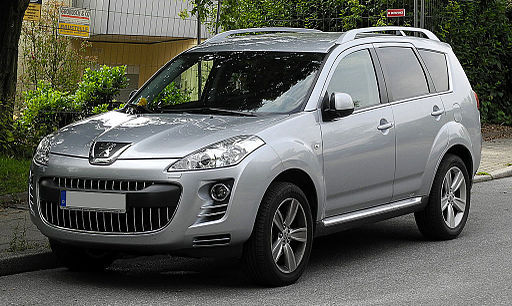
Peugeot 4007 faults
Here is a list of common and known malfunctions in the Peugeot 4007, which shares much of its design with the Mitsubishi Outlander (built between 2007 and 2012):
1. Dual Mass Flywheel and Clutch Issues
-
Premature wear of the flywheel
-
Clutch slipping or heavy pedal feel
-
Common in diesel manual models, especially with towing use
2. DPF and EGR Problems
-
Diesel particulate filter clogging
-
EGR valve getting stuck due to carbon buildup
-
Leads to poor performance and warning lights
3. Transmission Faults
-
Jerky gear changes in CVT automatic versions
-
Manual gearbox can develop notchy shifting
-
Transmission fluid overheating under load
4. Suspension Wear
-
Front lower arm bushings wear prematurely
-
Knocking sounds over bumps
-
Rear shock absorber leaks on high-mileage vehicles
5. Electrical System Issues
-
Central locking or window controls fail intermittently
-
Battery drain from faulty relays or modules
-
Random warning lights on the dashboard
6. Turbocharger Problems
-
Whistling noise or power loss
-
Turbo actuator or solenoid valve malfunction
-
Often linked to oil quality or delayed servicing
7. Air Conditioning and Heating Faults
-
AC not cooling properly
-
Compressor failure or refrigerant leaks
-
Blower motor resistor failure (fan stuck at one speed)
8. Brake System Wear
-
Rear calipers sticking or uneven pad wear
-
ABS sensor failure triggering warning lights
-
Handbrake lever becoming loose or ineffective
9. Interior Quality Issues
-
Rattling from dashboard or trim
-
Seat fabric wear and loose fittings
-
Infotainment system outdated or buggy
10. Fuel System Faults
-
Fuel pressure sensor failures
-
Poor cold start, especially in diesel versions
-
Injector leakage or carbon buildup in intake system
Peugeot 4007 as a used car
The Peugeot 4007 emerged in 2007 as the first mid-size crossover in the French brand’s lineup. Built in partnership with Mitsubishi, it borrowed heavily from the Outlander platform yet added Peugeot’s own flair in styling, equipment and driving dynamics. Although it ceased production in 2012, it lives on as a spacious, capable and well-equipped used SUV. This article explores its technical parameters, real-world performance, reliability record and key considerations for anyone hunting a 4007 on the second-hand market.
Heritage and Evolution
Joint Venture Origins
Peugeot and Mitsubishi teamed up to fill a gap above the 3008, aiming at families seeking seven seats, all-wheel drive and sensible running costs. While Mitsubishi handled engineering, Peugeot contributed interior design, standards of finish and dealer support in Europe.
Model Years and Updates
Across its five-year run the 4007 saw only minor changes. Early models featured basic audio and soft-trim levels; from 2010 on, touchscreen infotainment, dual-zone climate control and chrome exterior touches became standard on higher trims. Mechanically it remained stable, with a steady trio of engines and proven 4WD hardware.
Design and Dimensions
Exterior Styling
At a glance the 4007 balances rugged SUV cues with genteel hatchback lines. A high bonnet, upright grille and squared wheel arches create presence, while slim tail lights and a rising beltline inject Peugeot’s signature elegance. Ground clearance sits at 190 mm, enough for light trails.
Interior Layout and Space
The cabin accommodates seven in a 5 + 2 format. Front chairs offer firm support and generous armrests. Second-row occupants enjoy 280 mm of legroom; the third row suits children or occasional adult use. Boot capacity ranges from 197 L with all seats up to 1 705 L with the rear two rows folded, and a flat load floor when the centre seats slide forward.
Powertrain and Performance
Petrol Engine Options
• 2.0 L four-cylinder petrol: 147 hp at 6 000 rpm, 187 Nm torque at 4 250 rpm. Paired with a CVT transmission. 0–100 km/h in about 12.2 s, combined consumption around 9.5 L/100 km. • 2.4 L four-cylinder petrol: 170 hp at 6 000 rpm, 226 Nm torque at 4 100 rpm. Mated to a smooth five-speed automatic. 0–100 km/h in about 10.5 s, combined fuel use near 10.2 L/100 km.
Diesel Engine Option
• 2.2 L HDi four-cylinder: 156 hp at 4 000 rpm, 360 Nm torque from 2 000 rpm. Equipped with a six-speed manual or six-speed automatic. 0–100 km/h in roughly 10.8 s, combined fuel consumption of 7.2 L/100 km and CO₂ emissions around 189 g/km.
Driving Character
The diesel’s burly mid-range pull makes motorway overtakes effortless and keeps consumption in check on long hauls. Petrol variants feel buzzy under hard acceleration but deliver smoother behaviour around town. Braking and steering are well-weighted, giving the 4007 more driver engagement than many rivals of its era.
Drivetrain and Off-Road Capability
All models feature selectable four-wheel drive. Drivers can switch from front-wheel drive to full-time lock mode via a dashboard dial. Centre differential locking aids low-traction surfaces, while hill-descent control holds speed on steep descents. Without heavy underbody protection, serious off-roading is out of reach, but gravel roads, snow and light trails pose no threat.
Technical Specifications
| Parameter | Value |
|---|---|
| Length | 4 645 mm |
| Width (without mirrors) | 1 810 mm |
| Height | 1 730 mm |
| Wheelbase | 2 670 mm |
| Ground clearance | 190 mm |
| Boot capacity | 197 L (7 seats) / 697 L (5 seats) / 1 705 L (2 seats) |
| Fuel tank | 60 L (petrol) / 60 L (diesel) |
| Curb weight | 1 630–1 760 kg |
| Towing capacity | 1 800 kg braked / 750 kg unbraked |
| Top speed | 189–200 km/h |
| 0–100 km/h | 10.5–12.2 s |
| Turning circle | 11.6 m |
Reliability and Common Issues
Engine and Drivetrain
The 2.2 HDi gains a reputation for longevity when serviced every 20 000 km. Signs of overdue maintenance include noisy injectors, turbo lag spikes and DPF blockage in low-usage urban cars. Diesel models may suffer EGR valve carbon buildup. Petrol CVTs occasionally slip under heavy load; regular fluid changes reduce risk.
Suspension and Body
Soft-rubber bushes in wishbones wear around 100 000 km, leading to clunks over rough roads. Wheel bearings and rear trailing arm bushes can also fail on high-mileage examples. Inspect lower sills for surface rust, especially in salted winter climates.
Electrical and Comfort
Central locking actuators and electric window motors sometimes stall. Air conditioning may lose performance if refrigerant levels drop; leaks often occur at the evaporator housing. Navigation screens and headlamp washers can intermittently falter but are not critical.
Buying Guide for a Used 4007
Service History Review
Seek comprehensive records covering oil and filter changes, timing belt replacements at 120 000 km and gearbox or CVT fluid services. Diesel owners should verify DPF cleanings or replacements after heavy urban use.
Pre-Purchase Inspection
• Engine bay check for oil leaks around cam covers and turbo joints • Underbody inspection for rust on sills, rocker panels and subframe mounts • Drive both 2WD and 4WD modes on varying surfaces to validate centre-diff lock and hill-descent functions • Confirm smooth operation of automatic or CVT gearbox, listening for shuddering or slip
Mileage and Pricing
Values fluctuate by region, condition and powertrain. Rough guide in Central Europe: • 2.2 HDi 156 hp (6 spd manual) with 120 000–150 000 km: €7 000–€9 500 • 2.4 L petrol automatic with 100 000–140 000 km: €6 500–€8 800 • Pristine low-mile diesels under 100 000 km: €9 000–€11 500
Maintenance and Ownership Costs
Fuel and Consumables
Expect annual mileage of 15 000 km to cost roughly €1 300 in diesel fuel, €1 650 in petrol. Tyre replacement on 17-inch wheels runs about €600 for a set, brake pads and discs near €350 per axle.
Scheduled Servicing
Independent garages charge €200–€300 for an oil and filter service. Timing belt kit with water pump replacement averages €450–€550 including labour. CVT fluid changes near €250 when handled proactively.
Insurance and Tax
Insurance premiums fall into mid-range SUV bands, influenced by engine size and driver history. Annual road tax aligns with CO₂ output: diesels around €320 per year, petrol variants closer to €380.
Pros and Cons
Pros • Genuine seven-seat layout with respectable third-row space • Proven four-wheel drive system and hill-descent control • Strong diesel torque and efficient highway cruising • Spacious boot and flexible seating configurations
Cons • Diesel particulate filter issues on low-usage cars • CVT slip risk in 2.0 L petrol under heavy load • Rust-prone sills in harsh climates without treatment • Interior plastics feel dated compared to modern rivals
Conclusion and Alternatives
On today’s used market the Peugeot 4007 stands out for its genuine seven-seat capacity, secure all-wheel drive and robust diesel engine. Its link to Mitsubishi underpinnings delivers proven mechanicals, while Peugeot styling and trim levels retain a touch of French sophistication. For buyers who value space and capability on a budget, a well-serviced 4007 remains a compelling choice.
